Tuesday, 24 May 2016

Introducing Ant Man, the Queen and the Colony

We came up with the idea of using ants to conduct behavioral experiments at Liverpool Life Sciences UTC. We chose a species called Messor barbarus which is a species that eats seeds and farms aphids. These ants need to be kept at around 25OC, with good ventilation and little disturbance, conditions found in the model organism room in the innovation labs.
IMG_3728.JPG
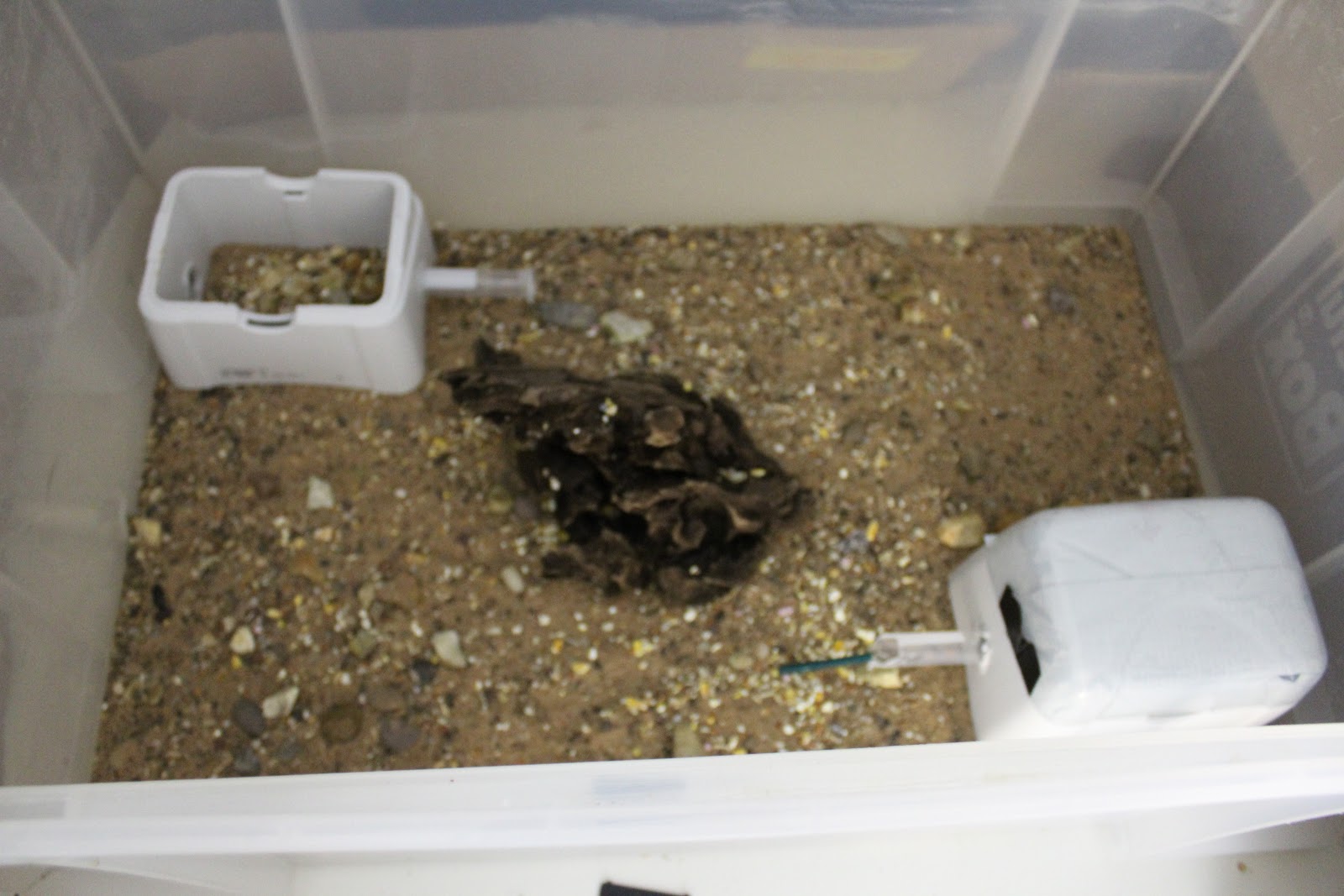
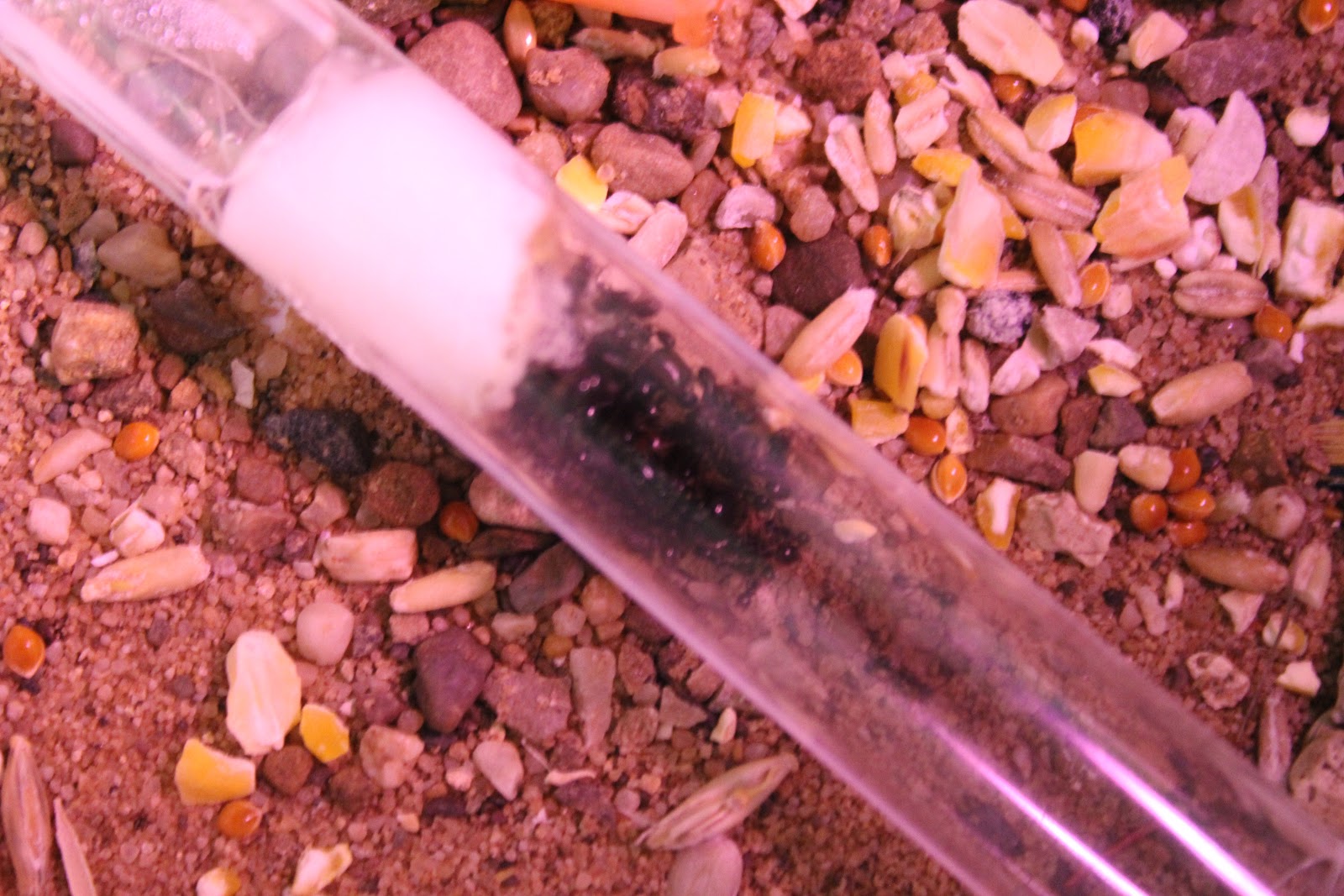
On April 12th the ants arrived and we placed them into their new home, it was at this point that we had found that the queen had laid a large amount of eggs whilst she was in transit from Spain to the UK, this created a very strong foundation for a new colony. At first no ants left the tube that they had arrived in but over the coming days they soon ventured out into the pipette tip box that we are using to contain them (so that when they are big enough they can move into the formicarium). The hive exploded with newly hatched ants some were just minor worker ants, some were major and some were the soldier ants. The main way to tell the difference is the size, this can be measured using image analysis software such as Image J.
IMG_3724.JPG
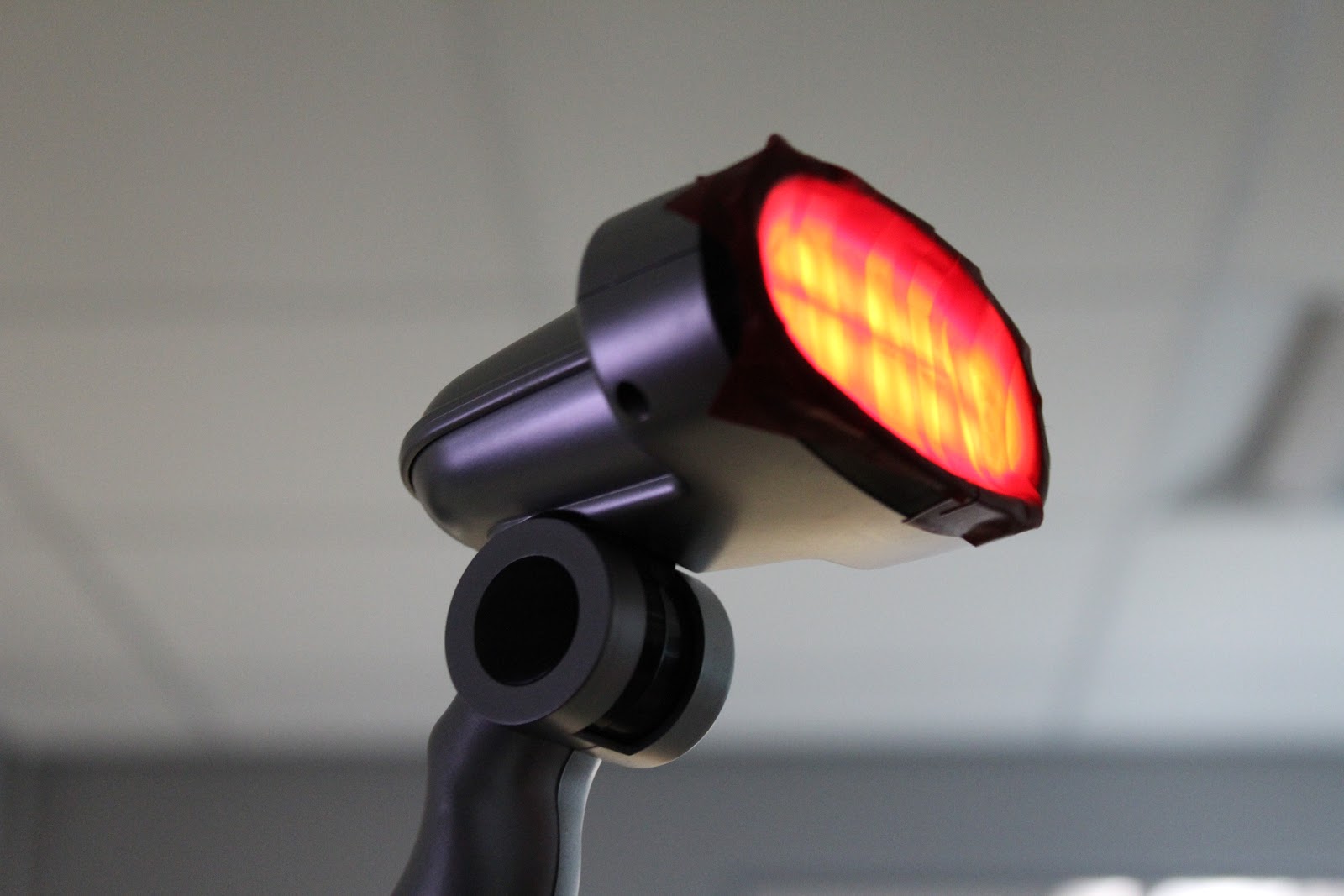
The pipette tip box in the bottom right contains the ants, so far only the minor workers have ventured outside and into the formicarium. We use a red light to observe the ants without disturbing them, this is because the ants vision is shifted away from the red end of the spectrum towards the UV wavelengths.


A few days ago the queen became very inactive and the ants swarmed her, they covered her, we believed that she was dying due to the fact that there was no activity at all, in retrospect we probably should have noticed how much sugar solution was being used up in just one day. Usually the ants only need to have a new eppendorf of sugar solution once every 3 days but at this moment in time they were using up one every day. As turns out the queen had been lay large amounts of eggs at least 10 in her three days of inactivity, from that we guessed that the queen was being fed and looked after by the other ants.
IMG_3493.JPGIn the coming weeks we have planned a few experiment including one based on testing the effect of concentration of sugar solution on habitat choice. To do this we needed to make a choice chamber for the ants. When the hive is big enough we will start feeding them mealworms, after some time we will give them meal worms infected with fungi to see how their behaviour changes. What this space for details of how our ant colony and experiments progress.

By Jack McKenzie (Ant Man), Erin Ruddock and Mazuba Maambo

Thursday, 12 May 2016

Bugs, Bites and Parasites - A Totally Tropical Tour!

On Friday afternoon, I, along with Dr Dyer and various Year 10 and 12 students, visited the Liverpool School of Tropical Medicine, which, for the uninitiated, is an institution that works on improving healthcare in developing countries by working on cures for such diseases as Malaria, Schistosomiasis, and Lymphatic Filariasis. I mention these three illnesses in particular because these are the three groups we were split up into, and also the three illnesses that made up the majority of our tour.


The tour started (after a brief health and safety talk, of course) with my group, which was called malaria, being taken into one of the rooms where the mosquitoes are housed. One of the scientists there then showed us the mosquito’s life cycle from the 1st, 3rd, and 4th instars (Larval stage) through to the pupal stage, and finally adulthood, at which point they must be housed in an inescapable environment in order for them not to bite anyone, compared to all previous forms of the mosquito that must be housed in water.  


We then moved on to the parasitology department, where we were shown pictures of sufferers of lymphatic filariasis, a disease affecting the lymphatic system (the system that is responsible for the removal of toxins, waste, and other unwanted materials via the production of lymph, a liquid containing infection-fighting white blood cells). The cause of Lymphatic Filariasis is small worms of the roundworm family, known as filarial parasites, being transferred from mosquitoes into humans through the skin, these worms then create thousands of larvae that enter the bloodstream. This causes ‘Lymphoedema’ (A swelling of limbs and other body parts with Lymph) which can lead to ‘Elephantiasis’, a permanent deformity making the limbs look like Elephants’ and requiring amputation. So all in all it isn’t a very pleasant disease.


On the walk between different areas of the facility we were shown smaller labs that were responsible for blood testing, and testing on more infectious diseases,  and some larger labs that were responsible for less possibly infectious diseases and parasitology.


The next illness we saw was Schistosomiasis, which is an illness caused by a genus of parasitic flatworms called Schistosomes, which infect freshwater snails who then go on to release the Schistosome larvae which penetrate the skin during contact with infested water. This can cause intestinal/abdominal pain, blood in urine, and liver enlargement, among other things.


Finally we were taken to the oldest part of LSTM in which we were able to talk to researchers and PhD students, which was particularly interesting to me as, personally, pharmacology is a field I’m very interested in going into.

By Isaac Basque-Rice
Year 10 student at Liverpool Life Sciences UTC

Wednesday, 27 April 2016

Water revisited: Molecule of the Month for May 2016

Over two years ago, in this series, I attempted to describe the unique role of the water molecule in Biology. Recently the world of Quantum Mechanics has collided with "classical" Biology in a way that could radically alter our thinking about many Biochemical phenomena, from catalysis and the mysteries of avian migration to electron transfer and photosynthesis. I don't intend to discuss these topics in this post, but a glance at the success of Jim Alkalili and JohnJoe McFadden's crusade to alert the world of the potential value of considering quantum level explanations for unexplained Biological phenomena, is gaining momentum! However in this post, I intend to combine a second look at water with a celebration of the 400th anniversary of the death of our greatest writer of English, William Shakespeare.  I have used some quotes from the cannon of the Bard in order  to structure this months return to water as my molecule of the month. [You will find a general introduction to water in my February 2014 blog post on water here.]

Smooth runs the water where the brook is deep

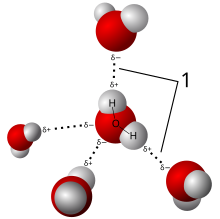
Briefly, water molecules comprise two atoms of hydrogen (white) and one of oxygen (red) in a relationship that is generally very stable. We know this from our own experiences: a glass of tap water brings no surprises! If we touch it, are we not cleansed? If we drink, it, is our thirst not quenched? Sorry, couldn't resist a little Shakespearean pastiche! The colourless, odourless liquid that is a glass of tap water just sits quietly in the glass: we are only aware of its presence when  it refracts incident light. Famously, a stick placed in water appears to bend away from the observer at the point of entry. [Do you know any liquids that bend a rod in the other direction? If not, look here. This is an excellent example of a robust physical model that allows predictions to be made]. Water may be a solid (ice is formed at temperatures below zero Celsius), liquid until 100 degrees Celsius, where it boils and forms a gas, steam. The inter-molecular forces that result in water adopting a relatively non-volatile liquid form at room temperature (or perhaps more importantly at 37 degrees Celsius) should be familiar to readers for my Blogs (take a look at this nice wiki site for a refresher). Perhaps the two features of water that are on the must learn list for Biochemists are its properties as a solvent,  as a model for understanding hydrogen bonding networks and polarisation effects in catalysis.

To unpathed waters, undreamed shores

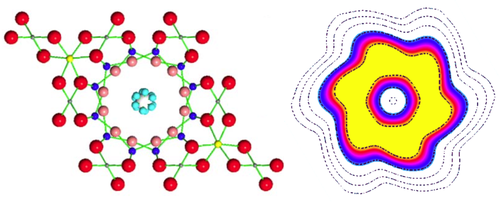
The recent observation that water molecules trapped inside crystals of Beryl (this will be more familiar to you in its transparent, bright green form, as emerald: the formula for which is Be3Al2(Si O3)6) points to a quantum effect that I recently discussed in connection with a visiting speaker at Sheffield, Professor Nigel Scrutton, from the University of Manchester. Beryl crystals, under some conditions are arranged at the molecular level into structures that contain regular hexagonal cavities. These cavities are just large enough to trap a single water molecule. What was unexpected was that the hydrogens can exist at 1 of 6 different places in the crystal, giving rise to a new structural form for the water molecule. It has been suggested by the team at Oak Ridge National Laboratory led by physicist Alexander Kolesnikov in a recent publication that the hydrogens in water, inside the crystal lattice, can tunnel through the crystal "wall" in order to adopt this unusual conformation. I like this description of quantum tunneling from Forbes Magazine 

Tunneling is one of the strange and wonderful features of quantum mechanics, the type of physics that takes over at very small scales. When a particle like a hydrogen atom meets a wall, quantum tunneling allows it to sometimes go through without paying the energy toll classical physics would require for the atom to go over or around.

I can understand the principle of tunneling; and I respect the value of the  tunneling concept  in explaining otherwise inexplicable observations, but when I read abstracts like:

Using neutron scattering and ab initio simulations, we document the discovery of a new “quantum tunneling state” of the water molecule confined in 5 Å channels in the mineral beryl, characterized by extended proton and electron delocalization. We observed a number of peaks in the inelastic neutron scattering spectra that were uniquely assigned to water quantum tunneling. In addition, the water proton momentum distribution was measured with deep inelastic neutron scattering, which directly revealed coherent delocalization of the protons in the ground state,

Figure captionI have to sit down and think much harder than usual! But that's all part of the challenge and joy of Science! It has been demonstrated by Dudovich's group (and I am pretty sure others that I am ignorant of) experimentally that electrons tunnel through barriers: by measuring a photon emission that can only occur if an electron escapes from its "orbital" a group of scientists at the Weizmann Institute provided a nice quantitative demonstration of the extremely fast timescales of electron tunneling. Hydrogen atoms tunnel as well, but the dynamics and the distances are considerably smaller than the tunneling properties of electrons and require greater considerations of steric constraints in protein molecules. Nevertheless, we must consider the likely placing of an electron and a hydrogen more as a probability rather than as a fixed set of 3 dimensional coordinates. The structure adopted by this quantum state of water is best described by a smeared pair of concentric rings. The molecule can adopt 6 configurations at once. It is difficult (especially for me) to decide what impact this observation might have in Biology, but I believe Biologists need to start a greater level of dialogue with physicists, so we can evaluate these concepts more critically.

Cease thy counsel, for thy words fall into my ears as priceless as water into a sieve

My next quotation from Shakespeare perhaps anticipates the tunneling phenomenon. I am coming round to the view that was expressed by Nigel Scrutton when I last heard him speak. And it is that we often assume that we know everything about enzymes, but of course the smartest scientists know that just isn't true. In fact it reminds me of a non-Shakesperean quote that I have used before, attributed to Physics Nobel Laureate, Richard Feynman

Anyone who says they understand quantum mechanics, doesn't understand quantum mechanics


That is, we are still to fully appreciate the role of water in Biology. As Shakespeare says, it is a "priceless" commodity: it is the medium in which all intracellular and most intercellular events are orchestrated. In fact we go to special lengths to keep water out in order to contain it (eg by elaborating cell membranes and hydrophobic cavities in enzymes and active sites). But on the other hand the concentration of water molecules is around 55.5M. Hence, priceless water in a sieve! This dichotomy needs a resolution and this will come with time as we find explanations to accommodate the anomalies in Bio-molecular behaviour. And so to my final quote from the Bard of Stratford.

Glory is like a circle in the water, which never ceaseth to enlarge itself, till by broad spreading, it disperses to naught

Shakespeare was again prescient! Clearly the drop is the particle and the ripples the waves. He understood wave particle duality in quantum mechanics over 300 years before modern science. Maybe he was also hinting at the possibility of dispersion of interactions brought about by the multiple possibilities of the conformations of water. Let us celebrate William Shakespeare with a long cool glass of water and try to bring to Biochemistry the insight Shakespeare brought to human behaviour through his beautiful use of language!