Thursday, 19 November 2015

Antibiotic Resistance in the news again

The BBC reported today a new study from the research team of Professor Jianzhong Shen at the Beijing Advanced Innovation Center for Food Nutrition and Human Health, College of Veterinary Medicine, Chinese Agricultural University. The work describes a more threatening form of resistance to a "last resort" antibiotic and was published in the medical research journal The Lancet. The issue of antibiotic resistance is high on the agenda of health care leaders and politicians and therefore not surprisingly it is often in the news. This is a short post to help you [and your families] to understand what all of the "fuss is about". And of course, it is National antibiotic awareness week!

Antibiotics are drugs, the first of which was penicillin, discovered by Alexander Fleming (pictured on the right, first left) and developed by the Australian pharmacologist and pathologist Howard Florey (right), first at Sheffield and then at Oxford with Ernest Chain (middle): all three shared the Nobel Prize for Physiology or Medicine 1945. Antibiotics are used to treat humans (and don't forget animals!) who have been infected with a microbe. The microbes that can be killed by antibiotics are are usually bacteria (also called prokaryotes, since their genomes [their DNA], are not contained within a nucleus) such as Escherichia coli (E.coli) or Clostridium difficile (C.diff). They can also be more complicated eukaryotic microbes, such as  fungi like Aspergillus and Fusarium that cause skin infections: these are also treated with antibiotics (sometimes also called antifungals). The treatment of the more persistent infections like Tuberculosis (TB), usually requires two courses of 4 antibiotics: isoniazid and rifampicin every day for 6 months, and pyrazinamide and ethambutol every day for the first 2 months. As you can imagine, this is a challenging routine for anyone, but even more so in remote parts of the world.

Antibiotics are not one type of molecule. Penicillin is called a beta-lactam, by the chemists who make them. Drugs like penicillin act on the enzymes that are essential for building the bacterial cell wall. My "favourite" class of antibiotic is ciprofloxacin (marketed as "cipro", for obvious reasons!). This drug, stops bacteria from completing the separation into two new cells at the end of cell division. It actually blocks the bacterial enzyme, DNA Gyrase. Our understanding of DNA Gyrase has formed the basis of the life work of an old friend Professor Tony Maxwell, first at Leicester and now at the John Innes Centre in Norwich. And currently, Tony is pioneering the use of beetles for the discovery of new antibiotics.


The targets of antibiotics are usually proteins,  including enzymes like DNA gyrase, or membrane channels and pumps such as the Tetracycline transporter (the figure on the RHS shows the arrangement of a typical drug resistance "efflux pump" such as the one that pumps out the drug, tetracycline, thereby making the bacterium resistant). Sometimes the antibiotics act on RNA-containing molecules and in particular the ribosome, the cell's protein synthesis "factory". You can more read about the classes and targets of antibiotics in scientific detail here, or more medically here.

So what is antibiotic resistance, how does it arise and why should we be concerned about the latest story? Charles Darwin lends his name to the theory of evolution, in which populations of organisms adapt with time, to meet the challenges of their environment. All of which is of course propelled by a process we call Natural Selection. We now know in some cases, in molecular detail, that Darwin was right and that his ideas provide an explanation for the emergence of antibiotic resistance. In other words it doesn't come as a surprise to scientists, but it does illustrate the responsibility that scientists have in advising on the most appropriate use of antibiotics (in the same way they should advise politicians on decisions relating to energy sources, IVF,stem cell therapy for example).

All genes, including those that confer resistance to antibiotics, such as penicillin, can change with time, through natural  processes that copy our genomes. Remember we, and microbes, have an inbuilt capacity to shape our genomes, through relatively common single letter changes (for example, G becomes C or A becomes T), or less frequently by the movement, or loss of parts of genes, entire  genes and even groups of genes). These mechanisms are the engines of evolutionary change. But they also open the door for antibiotic resistance.

Consider a gene encoding a protein, such as an enzyme; and now let that enzyme be essential for bacterial growth. A molecule is isolated from another microbe: a Streptomyces species, perhapsor a plant, that inhibits this enzyme. Think of it like throwing a stick into the spokes of a moving bicycle (I say think, but don't try it!). The stick, when thrown at a moving bike, will either miss the bike completely; it may bounce off the spinning wheel, or occasionally it will slot between two spokes. In the latter case, the bike will immediately stop and the cyclist will possibly fly off over the handlebars. (Yes this has happened to me!) The stick is the antibiotic and some of the antibiotic you take, just like any drug, doesn't hit the target (but that's for another post). If the bicycle manufacturer adds a wheel with no spokes (think of Sir Chris Hoy, riding round a velodrome), then the stick will no longer stop the bike. The bike is now "resistant". The cycle inventor wasn't trying to design a bike that would be resistant to a stick thrown by one of the spectators, s/he was trying to improve Team GB's chances of Gold. In the same way changes are introduced into bacterial genes and therefore their corresponding proteins, through the in-built mechanisms of evolution. If this makes those proteins resistant to the antibiotic that the doctor has prescribed, then, with time, this "mutant" strain will grow in number and will spread in the population: even around the world!

The introduction of antibiotics since 1940, is a form of "Natural Selection".  It is no different in principle than selecting the features of a dog for breeding. However, one of the  consequences of what we now believe is the excessive use of antibiotics, is the emergence of resistance. We humans, have effectively promoted the spread of antibiotic resistant microbes.

I started by alerting you to recent BBC article. So why is it important? There are some antibiotics that are called "last resort", where the development of resistant genes has either only been reported very recently, or has been effectively  "contained". In the case of Colistin, a class of antibiotic based on a parent molecule called polymyxin. This is a cyclic peptide molecule (see diagram, LHS) that is produced by the bacterium  Paenibacillus polymyxa var. colistinus. It solubilses the bacterial membrane just like a detergent. Because it is more like a general purpose detergent, it doesn't have the same level of specificity as our stick above. Think of it as a large boulder thrown at the bike! Knocking off the cyclist and crushing the bike. In other words as my old maths teacher used to say of my solutions to problems: "it is correct, but as usual Hornby, you have used a sledge-hammer to crack a nut!". But when the nut-cracker doesn't do the job, sometimes you do need a sledge hammer. (I would say in my defence!)

Such classes of compounds do also have severe side effects; in the case of colistin (sold as Colymonas or Koolistin), there are mainly kidney function issues. However, the decision to prescribe any drug in an emergency, will be a judgement made by the doctor based on whether the side effects represent an acceptable risk compared with the threat to a patient's life. 

Report of resistance to colistin are very rare and have always been associated with mutations in the bacterial genome, its chromosome. However, Professor Shen's group have shown that the resistance mechanism is a result of a plasmid-borne gene, which effectively masks the cell membrane from the hole punching effect of the antibiotic. Without explaining the details of plasmids, think of them as tiny versions of bacterial genomes. A bacterial genome will have around 3 000 genes arranged in a single large circle of double stranded DNA. Each circle is copied during cell growth and then the two daughter cells acquire a single copy (remember this is the process that is targeted by cipro, above). Plasmids, in contrast have only a dozen genes (so they are a few hundred times smaller, circles of DNA). They are also able to copy themselves (or replicate) so that a bacterium may posses between a few and a few hundred plasmids for every chromosome. Worse still, in some situations these plasmids can move around populations of bacteria and gatecrash. The Beijing findings, demonstrate that a plasmid can transmit resistance to colistin, a last resort antibiotic, at a level that is very difficult to "contain". This result is a timely reminder of the challenges facing the world.
 
Can antibiotics be used to treat viral infections? The term antibiotic refers to drugs that will stop the growth of a living microbe. A virus is not a true living organism. A virus must "steal" parts and functions of the cell it infects in order to copy itself and if pathogenic will cause us health problems. Think of the virus as a passenger on the bike (above). If the stick wrecks the bike, and even the rider, the passenger often walks away unharmed. If we want to prevent a viral infection taking hold, we generally administer a vaccine: which blocks the viruses ability to infect a cell. If the virus possesses enzymes or RNA molecules, that are not found in humans, for example the enzyme reverse transcriptase is the "hallmark" of retroviruses like HIV and Ebola, then drugs can be used to inhibit these virus-specific processes. We refer to such drugs as antivirals. They are not the same as antibiotics. If antibiotics are prescribed to treat a viral infection they will have no effect and may further promote the emergence of antibiotic resistant bacterial strains. This is why politicians are cautioning the medical profession against "over-prescription" of antibiotics.

I should say that a decision to prescribe or not prescribe is never easy. The doctor may be faced with a very sick patient, presenting with a high temperature. The speed with which a diagnosis can be made to  distinguish between a viral or bacterial infection may require a default decision to prescribe an antibiotic. This is of course completely understandable. But when antibiotics are routinely being added to animal food in an unregulated way, it is clear that people need educating and controlling. Professor Timothy West from Cardiff specialises in these area and you can read more about his work here and at the BBC.

Finally, I believe that all school classrooms should have posters on the wall made by students explaining the properties and the sensible use of antibiotics. This will hopefully help buy us some time to produce new antibiotics! Why not have a competition to design the most informative poster?


Monday, 16 November 2015

Coming soon.....

Over the next month, you can look forward to the following posts:

1. Life Sciences in the Ukraine
2. A new Molecule of the Month and
3. A celebration of 50 years of Francis Crick's "Wobble Hypothesis"
Science in the Ukraine will be posted later this week, I hope you like it,
 

Wednesday, 28 October 2015

Molecule of the Month: November 2015 The Inflammasome

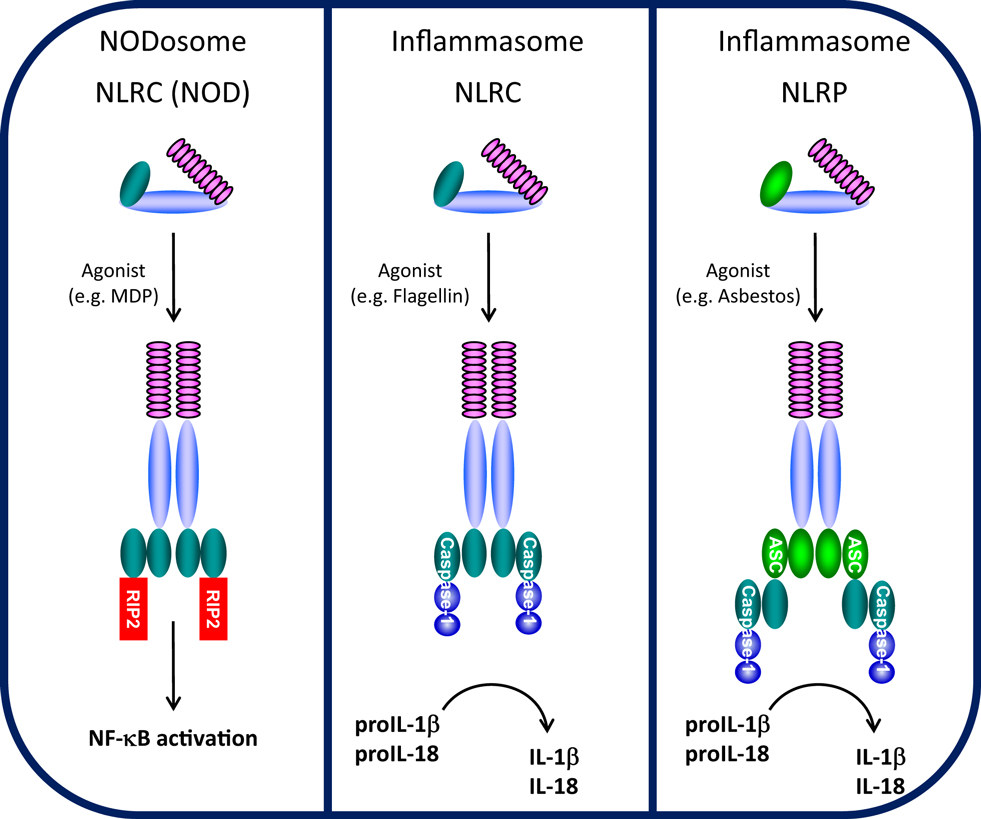
A recent article in the journal Science announced a discussion of the "Inflammasome" (see the diagram LHS, taken from the Invivogen web site) with the title "Assembling the Wheel of Death". It had to be read! The work was carried out by groups in he USA and China at the Universities of Harvard and Tsinghua. And after reading about this multi-protein complex, I thought it would make an excellent choice for my next Molecule of the Month! So before we look at the molecule itself, just what is the inflammasome and what is its biological role?

Immune defences are possibly amongst the most complex phenomena found in Nature; and from an evolutionary point of view, the sophistication of the immune response is quite different between organisms. In simple terms, the innate immune response is a quick-fire generic mechanism to fend off threats from pathogenic microbes and foreign bodies, such as asbestos fibres. The adaptive immune system, on the other hand, is confined to vertebrates, combats an attack and leaves us able to mount a defence against future attacks of the same kind. The inflammasome is a universal molecular assembly and is part of the innate immune response.

The recent articles in Science provide a structural basis to the triggering of the
assembly of the inflammasome and the image on the right gives you some idea of the overall shape of the complex. The pink "cap" is the NAIP2 protein and the pale blue colour are the NLRC4 proteins. The inflammasome has different components and stoichiometries in different organisms and the organisation shows interspecies variation, that relates to specific differences in the characteristics of the complex in each setting. However, the general features of the  inflammasome are shared by all inflammasomes, and I shall concentrate on these here. The first point to note is that the IF (fed up of typing inflammasome already!) is an intracellular complex that promotes the "activation" of proteases and the maturation of cytokines. The immune system is littered with "latent" or "pro" forms of proteins, that require some form of modification, such as the release of an N-terminal peptide, before they can perform their inflammatory-related role. Think of trypsinogen and chymotrypsinogen, pro-enzyme forms of the serine proteases, trypsin and chymotrypsin respectively. The conversion of an inactive form to an active one by limited proteolysis or ligand binding is a common thread in biochemical regulation: the latter is referred to as "allostery" (discussed in an earlier post on RNA Polymerase). 

The image on the left, illustrates the protease cleavage events associated with the activation of Caspase 7, an enzyme (an executioner enzyme, no less) that is intimately associated with programmed cell death (apoptosis). Using  cryo-electron microscopy (as an aside, you may have noticed how often this technique is appearing in the structural biology world: it seems to be an unstoppable force and is a major new focus at Sheffield) the authors derive a series of incredibly detailed molecular images. If you are looking for more information, the Wu lab home page contains links to publications that provide a comprehensive background to the molecules and their function. See here, for example.

Perhaps the most significant finding of this work (summarised schematically alongside related complexes on the left); notwithstanding the elegant microscopy, is the detail that has revealed how the IF is triggered by a single molecular recognition event from an invading bacterium (the pink blob in the image above), which in turn promotes the assembly of the intact and active IF. In addition, mutations in the NLRC4 protein (the pale blue wheel-shaped assembly attached to the pink cap, above) cause severe autoimmune inflammatory disease. The structure provides insight into how the IF fails to assemble properly in patients carrying these genetic lesions.The use of cryo-electron microscopy, drawing on X-ray crystallography has led to a molecular explanation for the triggering of the inflammatory response and moreover how mutations can throw a spanner in the works of macromolecular assembly, with such a devastating effect.

Saturday, 10 October 2015

The 2015 Nobel Prizes

I just posted this on my Sheffield Undergraduate Blog site, but I covered some of this material in my lecture on Thursday at the UTC. So I thought I would post here too. There is a power-point link on the RHS in the "Interesting Links" box, click Nobels 2015. It may be a little hard going for those not taking A level chemistry, but see what you think! 

The recent Nobel Prize in Chemistry awarded to Tomas Lindahl, Paul Modrich and Aziz Sancar (L to R opposite) provides a great example of just how powerful Biochemistry can be. It sits at the interface between Life Sciences and Chemistry, and can be instrumental in helping to elucidate the molecular basis of processes that are not only interesting in themselves, but also provide the foundations for future developments in medicine. 

The announcement made by the Nobel foundation last week, included the following phrase: “for mechanistic studies of DNA repair", which made me think immediately of the suggestion made to the Krebs Institute management board by one of our distinguished advisers, (Sir) Rich Roberts: "why don't you refresh the Krebs Institute mission..., how about mechanistic biology?". What a great concept, we all thought. The "strap line" was duly adopted, posted on the Institute web site,  incorporated into our grant applications and was bandied around at meetings just as much then, as it is now! Rich, a chemist by trade, obtained his PhD with David Ollis FRS, the head of Chemistry at Sheffield from 1963-1990. Rich always describes his project as simply being given a log from a Brazilian tree, and being told to find something interesting in it! Which he did pretty quickly! From every conversation I have had with Rich (and you can read the story he tells at these three blog posts: one, two and three), his understanding of Chemistry has always informed his Molecular Biology work: just take a look at Roberts RJ on PubMed

Getting back to DNA Repair, I can't think of many better examples of how the partnership of Chemistry and Biology, captured succinctly by the adjective "mechanistic",  has been so successful in explaining the underlying mechanisms of Darwinian evolution. In the absence of the advantages of the post Watson and Crick era, Darwin's ideas centred on a level of intrinsic  genetic change, on a "geological" timescale to explain the transitions in the fossil record. But mechanisms for change, or mutation, must be controlled in order that we don't stray too far from the "healthy" programme of reproduction and development. Without DNA repair mechanisms, we would succumb to diseases like cancer, much more frequently. Or as King Lear might have put it more eloquently:

Sans DNA repair... "O, that way madness lies"

What were the key pieces of work that led to the Nobel Committee's decision? As Tomas Lindahl commented when interviewed shortly after the announcement; there were perhaps a dozen scientists who contributed to our current understanding of the principles of DNA repair, so how did the committee pick out these three individuals? One way to find out is to take a look at their publication record: the time honoured way of assessing the "impact" of a scientist (you can read more about this here). Here are my own choices of a single paper from each of the three laureates. These papers exemplify the quality and strategies used by the laureates, and provide an insight into the quality of these worthy Prize winners.


In this paper Tomas Lindahl and colleagues at the Imperial Cancer Research Fund labs at Clare Hall (soon to be relocated with other London labs to the brand new Crick Institute), used a range of analytical techniques (protein purification, protease mapping and petide analysis by HPLC) to demonstrate that the adaptive response protein (ada) comprises two domains and that each domain can remove the alkylation damage conferred on guanines in DNA (a form of damage). In doing so, the alkyl group (eg a methyl) is transferred to a Cys residue in a conserved motif. The enzyme is subsequently inactivated and can no longer participate in repair functions (this is a suicide repair event, as far as the enzyme is concerned!). Interestingly, the ada protein has a second function: it can stimulate expression of the DNA sequence, encoding its own protein sequence! These incisive biochemical studies characterized the work from the Lindahl group over a period in excess of 30 years, of sustained, high impact science!  The image on the right was obtained by NMR later and both confirmed and added the molecular details to these landmark studies.

Escherichia coli mutS-encoded protein binds to mismatched DNA base pairs.  Su SS, Modrich P. Proc Natl Acad Sci U S A. 1986 83:5057-61.


PDB 1oh6 EBI.jpgPaul Modrich's lab at Duke University  (North Carolina) unearthed the mechanism of mismatch repair catalysed by a complex of enzymes that are referred to by their genetic names: MutH, MutL, MutS, and MutU from E.coli. I have picked a paper relating to MutS. This early publication demonstrates the similar approach taken by the Modrich lab (as Lindahl) in purifying and characterising functions using a combination of protein and nucleic acid chemistries. The lovely example in the paper of DNAse footprinting reveals evidence for mismatch recognition by the MutS protein. The structure shown left , once again confirmed the elegant biochemistry from Modrich's lab.

An external file that holds a picture, illustration, etc.
Object name is zpq0450641240005.jpgFinally, the Turkish born Aziz Sancar, now at the University of North Carolina has brought a rigorous approach to understanding DNA repair (and latterly a related set of proteins associated with  Circadian Rhythm and cell growth in plants and animals). In the above paper, a little more recent than the previous two, Sancar's lab tackle the relationship in activity terms between the cryptochrome and photolyase encoded genes referred to as Cry-DASH. This paper illustrates the systematic approach to addressing a controversial issue relating to a set of genes/proteins that share evolutionary links. Once again, the conclusions drawn are supported by associated structural work: the structure of a Cry-DASH protein interacting with damaged single-stranded DNA is shown opposite.

In conclusion, the elegant experimental work of Lindahl, Modrich and Sancar shares a lot in common. Their identification and characterisation of the proteins that recognise and fix a range of lesions from mismatches, chemical modifications through to light induced pyrimidine dimers provided a starting point. These authors and subsequently numerous other groups have confirmed and extended the work and we are now beginning to harness these results for therapeutic applications. The interdisciplinary nature of this work: chemistry, biochemistry, molecular cell biology and medicine, fell into the Chemistry Prize category, but it seems to me that it could equally have earned the Prize in Medicine or Physiology. Congratulations to all three winners!

Thursday, 1 October 2015

The fulminates, molecule(s) for the Nobel month of October

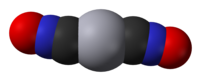
Mercury-fulminate-3D-vdW.pngOne dictionary definition of the verb to fulminate is "to explode violently". A second, more chemical definition would be "to react a metal with nitric acid and ethanol". The result of the latter, as discovered by Edward Charles Howard in 1824, is a highly explosive compound comprising a metal and a fulminate ion 
 
which is  also shown top left as mercury fulminate in a space filling format. In fact mercury and silver are the best known of the fulminates. The reason for discussing them here is partly because it is Nobel Prize month, and this time last year I discussed dynamite and nitroglycerin. This year I am attracted to these molecules because of what they can also teach us about electrons, bonding and energy. [If you didn't know, Alfred Nobel made his fortune from explosives!]. 

Chemistry at the turn of the 19th century was largely empirical. That is, most experiments were look-see, and relatively few scientists carried out systematic investigations. There were of course some notable exceptions: but in trying to harness the power of chemistry during Queen Victoria's reign in England, was not dissimilar to the attempts to harness the power of molecular biology in the early days of the Biotechnology industry. In other ways the knowledge base was inadequate. In fact Mendeleev's first Periodic Table was published in 1869, about 40 years after the start of the Industrial Revolution and the birth of the Chemical Industry! So when Edward Charles Howard (above) added mercury to nitric acid, followed by a dash of ethanol, mercury fulminate was "born". [Just think of the Health and Safety consequences for proposing this as a first year chemistry practical!]. Silver fulminate, prepared in the same way is even more unstable and can actually explode under its own weight, and under water!

So why are these fulminates so reactive? It is thought to be  the presence of the weak single nitrogen-oxygen bond which leads to its instability. Nitrogen easily forms a stable triple bond to another nitrogen atom, forming gaseous nitrogen. This "tension" generates the compound's intrinsic instability. Why is the silver salt more unstable than the mercury salt? I thought about this for a while and my conclusion is that mercury is a liquid at room temperature, owing to the unorthodox arrangement of its inner and outer electrons. It may be that this confers a minor stabilising effect that cannot be achieved by silver ions.  Silver has the electron distribution: 2,8,18,18,1. Any thoughts from inorganic chemistry experts?

There is another twist to the fulminate story. The chemists among you will have recognised that the formulae for silver cyanate (AgOCN) and and silver fulminate (AgCNO) are technically equivalent. In the 1820s, these observations led to a huge debate betwee one of history's most illustrious chemists, Justus Liebig, who discovered silver fulminate (Ag-CNO) and Friedrich WÅ¡hler, who discovered silver cyanate (Ag-OCN). This was only resolved when  JÅ¡ns Jakob Berzelius came up with the concept of isomers. The tension in the fulminate molecule seemed to have rubbed off on Liebig and  WÅ¡hler! It was also Alfred Nobel who had the last laugh: he patented the use of mercury fulminate in his explosives and therby generated even more wealth. Finally, although the fulminic acid molecule looks very simple, its structure was only determined about 10 years ago!  I think this is a suitable choice for the Nobel month of October and I wonder what explosions will emerge next week when the Nobel committee announce the results of their ruminations and deliberations.

End note. I came across a word I have never heard before in connection with the fulminates. Brisance: defined chemically, as the shattering capability of an explosive, measured by the state of a shell after an explosion. So, in summary, silver fulminate has a greater brisance than its mercury derivative: its "electron shells" directly impact on "ammunition shells!" Alfred Nobel was vilified in his lifetime for his contribution to death in warfare, but I believe his endowment of the Nobel Prize has had a major impact on the public awareness of some great Science!

Friday, 25 September 2015

Here we go!!! Greenland Biodesign 2015

Well hello, communications director Liam here, welcome to my first ever post on the UTC Innovation Labs blog! I aim to give weekly updates on the dealings of Greenland, and any new aspects within the labs. I hope to be consistent, though I cannot promise this. If I do miss any weeks, I will sincerely apologize while I’m ahead. Now… On to the post!

It’s a new year and a new start to the UTC, and I hope by now that everyone is now settled in and ready for what the year will bring, we at Greenland sure have. Already, we have begun creating ideas for projects, and have undergone a management restructuring, with year 13 and year 12 alike. The new senior scientific supervisor for Greenland is Rachael Winrow, with Tom Garvey as the director of research and development, and Moira Morgan as the laboratory superintendent. A full summary of the current members of Greenland can be seen below:


The process of enrolling new members for Greenland was a long and challenging task for Professor Hornby and Dr Dyer, as there was a great abundance of enthusiastic young minds that were already itching to go. As you can most likely see, there are still places available at Greenland, and I do encourage you to join if you are interested, as it is an opportunity that can open many doors in the future of scientific careers. In other news, I have recently finished creating the prep room requisition forms. These forms are going to be used for requesting materials from the prep rooms, while also making it easier for the lab team to get you what is needed, as they will now have a record of what is needed, and who needs. The form is as follows:

  
The forms will be located near each prep room door. Note that your desired materials will not be ready at the correct time if you do not use one of these forms, as the lab team can only handle so much!

That’s all for this week Hope it has given you a good overview of the week, and I will be back next week.

Bye!


Wednesday, 23 September 2015

Greenland Biodesign Projects 2015

The Greenland Biodesign team at the UTC have undergone a management restructuring over the summer (you can read all about this shortly in a forthcoming post from their communications director), and, following an initial meeting with team members, below, you will find a summary of the research projects for the coming year that will form a collaboration with my own research lab at the University of Sheffield. Before I outline the projects though, here is a little background to how the research project idea and Greenland Biodesign came about.

The Greenland group was initially set up during the opening year of the Liverpool Life Sciences UTC in order to provide an outlet for students who wanted to take their own interests in Science a little bit further. The team initially comprised Y12 students from both A Level and BTEC courses, and was aimed at combining all the features associated with a "Translational Biotechnology" research team. This provided an environment for bringing students whose aptitude was more experimental, with students who wanted to develop their communication and leadership skills, and of course with students who simply love Science and see themselves as Liverpool's next Nobel Laureates! 

With the help of George Rule, a physics graduate working in the Studio school at the time, and a number of other staff; students in the Greenland group proved instrumental in getting the Innovation Lab experience off the ground in that first year. I should perhaps say why Greenland! Briefly, the Life Sciences UTC in Liverpool occupies a refurbished Victorian sugar warehouse. The original site was however, part of Liverpool's highly successful, but relatively short-lived romance with Arctic whaling. The arrival of the son of a Yorkshire whaling pioneer, William Scoresby, (William Scoresby Jr.), triggered the development of Liverpool's whaling industry. The Merseyside built Baffin set sail for Greenland at the beginning of the 19th century and Scoresby's journey is described in his book "An Account of the Arctic Regions and Northern Whale Fishery", published in 1820). However, his motivation wasn't purely economical; he also mapped part of the Greenland Coast (sometimes referred to as the Liverpool Coast) and later in life became a prominent educationalist. I think the connection works well for this adventure too! Chris Routledge has a nice web site devoted to Scoresby and whaling (as well as some other nice local interest topics and images, if you are interested). And of course everyone should read Herman Melville's Moby Dick.

Moving on to the projects (at last I hear you say?), I wanted to build on my experiences with students over the last two years and provide a new model for research engagement, now that I am back in my old job at Sheffield. Naturally, my own research interests are limited and single handedly, I can't hope to provide projects that will interest every student. However here are the topics that emerged from the meeting a couple of weeks ago. Dr Dyer and I will manage the logistics and I will be putting you in touch with undergraduates, postgraduates and academic colleagues at Sheffield as the projects develop. This will help us move towards a publishable outcome, as we have done over the previous year, as well as build your research experience. All projects will be led by me from Sheffield, but may often include additional input from academic and/or commercial collaborators (as indicated). My involvement usually ranges from extreme enthusiasm and unreasonable expectation to helping to find someone who knows what they are talking about!

The Projects

1. Development of applications using the Polymerase Chain Reaction (Suitable for Chemists, Biochemists, Geneticists, Computer Scientists)

2. Rapid extraction of genomic DNA and its amplification from a wide range of organisms (in conjunction with Bioline, London). [Suitable for Chemists, Biochemists, Geneticists]

3. Optimising random mutagenesis using a novel error prone hyperthermophilic DNA Polymerase (in conjunction with ATY Biotech, California). [Suitable for Chemists, Biochemists, Geneticists, Computer Scientists]


4. Analysing raw genome sequence data from the meal worm, Tenebrio molitor (in collaboration with the Liverpool School of Tropical Medicine). [Suitable for Chemists, Biochemists, Geneticists, Computer Scientists]

4. Comparison of the meal worm and the wax worm as model organisms in teh development of new antibiotics (in collaboration with the John Innes Centre at Norwich) [Suitable for Biologists, Biochemists, Geneticists, Computer Scientists]

5. Proteomics of mealworm during development and metamorphosis (in collaboration with the Department of Chemical and Biological Engineering, University of Sheffield) [Suitable for Chemists, Biochemists, Physicists, Computer Scientists]

6. Development of innovative, low cost, laboratory classes for the REAL programme (Research Enhance Active Learning), for implementation Schools and Universities [Suitable for all students]

7. Applications of 3D printing in Molecular Biology: developing new instruments and solutions for experimental research [Suitable for all students]

8. Comparative annotation of the meal worm genome.

9. Using RasMol and PyMol for the interpretation of mutational data on DNA methyltransferases (epigenetics), Chloramphenicol resistance enzymes (antibiotics) and the Krebs Cycle enzymes Pyruvate Dehydrogenase and 2-oxoglutartae dehydrogense. [Suitable for Chemists, Physicists, Mathematicians, Computer Scientists and Biochemists]

 10. Open projects. Students are invited to submit their own ideas and Dr Dyer and I will attempt to accommodate the ideas, possibly through collaborative partnerships. [Suitable for all students].

Dr. Dyer will provide you all with further details on how to sign up for these projects and as soon as you have been allocated a project, there will be a meeting at which resources will be allocated. However in the meantime, I would like you to use the information (and key words) in the titles to find out more yourselves. Below here, there is a comment box, if you have any questions at all relating to the topics, please enter your questions/comments and either me or Dr. Dyer or I will do our best to respond.