Thursday, 18 September 2014

Master classes in communication: Lisa Jardine's Point of View

I try not to miss an episode of "A Point of View" which is usually broadcast at 8.45am on Sundays on Radio 4. But when Lisa Jardine, is the guest presenter, I make sure that I am by the radio, and if I can't make it, I download the podcast. The format is simple, the presenter reads an audio essay in 10 minutes, no more: no less. Other presenters include journalists, thinkers, academics, politicians etc. - I should also say that the Australian author and journalist Clive James comes a close second to Professor Jardine. Why do I enjoy Lisa Jardine's broadcasts so much? It could be because she happens to be the daughter of Jacob Bronowski, whose book and TV series, "The Ascent of Man" has stayed with me as an influence ever since I watched the series as a 15 year old schoolboy. No, it is because her use of language and choice of anecdotes, make her my favourite media communicator. As Professor of Renaissance Studies at University College London, she brings enormous insight into the legends of Science: iconic figures such as Isaac Newton and Robert Boyle. Her towering intellect combined with a life, lived rich in experience and through her encounters with some of the greatest minds of the last half century, have endowed her with a rich, cultural reservoir which she dips into regularly to enrich her essays. And this is why I want to encourage you all to download her Points of View (or PoV)!


The last PoV I tuned into was entitled "The Horror of War". I don't intend to dissect the broadcast as an amateur literary critic, but suffice to say that in 10 minutes, she manages to engage you, inform you, entertain you and leave you moved by the sincerity of her views and values, with a remarkable eloquence and economy of language. By contrast, apart from a few exceptions such as the mesmerising language of the journalists on Radio 4's "From Our Own Correspondent", the many hours I spend wading through the academic literature, the essays I from students at all levels, I feel that language skills have been eroded to the point of functionality, at best. And to find ourselves at this point, when our ability to communicate our Science, has perhaps never been so critical. For example, the need to explain the key principles of antibiotic resistance is seen to be a National priority: hence the Longitude Prize. But how many times have I heard "experts" in the media giving at best muddled and at worst, downright incorrect explanations of the mechanisms that give rise to resistant populations of bacteria. I don't think John F Kennedy would have had a problem both in recognising the importance of such an issue and then effectively communicating it.


If we are to provide students with the training needed to carry out incisive experimental Science, or indeed the tools for contributing to theoretical Physics, then we must also impress upon them the need to respect the significance of communication and dissemination. I am not suggesting that we need to get back to Shakesperian values, but I do think that Lisa Jardine's Points of View broadcasts could be used as a framework for teaching such skills. They provide not only superb examples of spoken communication, but are wonderful examples of perfectly crafted essays. 

Saturday, 13 September 2014

Epigenetics: all fingers and thumbs: Molecule of the Month for September

I was trying to find a context for this month's choice for molecule of the month, to avoid accusations of self indulgence (I work on these enzymes)! My choice is the family of enzymes responsible for modifying the genome in many organisms that forms a major part of the Biological phenomenon called "epigenetics" or increasingly, "epigenomics". Epi simply means on top of, and so epigenetics is something that modifies the phenotype of a gene. Think of it like seasoning your food: chips without salt and vinegar, or coffee without milk! For some, like me, black coffee is fine as it is, but some need milk or even cream, before they can enjoy it. The study of epigenetics really came to prominence around 25 years ago when despite considerable experimental challenges, scientists including Timothy Bestor and Adrian Bird began to develop a molecular framework for understanding DNA methylation in higher organisms. The methylation of DNA is found in most organisms (but not all!), sometimes the adenine is modified and in other organisms the cytosine. In some organisms, both nucleotides can be modified. In bacteria, methylation of the genome is part of a mechanism that protects the DNA from attack by restriction endonucleases, enzymes that cleave double stranded DNA in two. These enzymes formed the basis for the development of molecular cloning in the 1970s and '80s in particular (enter Rich Roberts in the search field for more on this). 


The methylation of cytosine bases in DNA not only provides bacteria with a primitive immune system (I should emphasis that the role of methylation and its evolutionary emergence is not as simple as this, but a discussion of this would be a distraction here), it is also at the heart of gene regulation and genomic regulation in vertebrates. After Tim Bestor identified the first vertebrate DNA methylase (DNA MT1), several more have been discovered, but it is clear from work in his lab and that of "transgenic" scientists like Rudolf (Rudi) Jaenisch in the USA, that methylation drives a number of fundamental processes during development. What is fascinating about the enzymes (such as DNA MT1) is that the methylation chemistry is carried out by a structure that is very similar in organisms as evolutionary distinct as microbes and humans. The conservation of mechanism is also preserved in the genome and can be visualised by simple BLAST searching. Therefore, when Rich Roberts and Xiaodong Cheng (and colleagues) determined the 3D structure of the cytosine-specific DNAMTase from Haemophilus haemolyticus (M.HhaI) around 20 years ago, it proved to be an excellent model for understanding the molecular basis of DNA methylation in all Life. 

The structure I want to discuss is the complex of M.HhaI with its DNA duplex,
caught in the act of methylation, before the enzyme leaves the product. This was achieved by the combination of chemical synthesis and Molecular Biology to facilitate X-ray crystallography. If you look closely you will see that the enzyme wraps around most of the DNA double helix, but remarkably, the target Cytosine base is flipped out. This means that the catayltic (active) site can now readily transfer the methyl group from the cofactor S-adenosyl-L-methionine (one of two methyl donors in Nature: what is the other?), to the target base. The reaction over, the enzyme pops the modified base back and goes on its way. 


At first glance this seems like a very elaborate mechanism, but without giving you chapter and verse, what has emerged since this landmark study, is that many enzymes that repair or modify DNA, have been shown to use base flipping as a means of reaching the parts that they would otherwise find difficult to reach. (It is possible to unwind the strands to access the bases, but this leaves the DNA vulnerable to degradation and requires greater molecular sophistication). It seems that Nature has found ways of capturing flipped bases, during a natural "breathing" phenomenon, or proteins have developed that readily push out the target base, suggesting that this is a primitive molecular function. Enzymes that repair the damage of sunlight (where Thymine bases that lie next to each other can spontaneously fuse) utilise base flipping as do enzymes that repair mismatches in the otherwise faithfully replicated DNA helix.

The crystal structure of the flipped base was made possible by the use of a fluorinated version of the cytosine, incorporated into the short synthetic DNA molecule, mimicing a drug that is used to treat a number of diseases: 5-fluorouracil. This combination of synthetic chemistry, X-ray crystallography and molecular biology (to engineer recombinant protein expression) is a wonderful example of multi-disciplinary Science. Moreover, while the catalytic questions can be analysed using the model of M.HhaI, Bestor and many others have now developed ways of tracking DNA MTase by fusing it with GFP and establishing its role with other genome modifiers in modulating the genome in a diverse number of ways (see top RHS, the fluorescence of PCNA, a marker of human DNA replication, colocalizes with DNMT1).


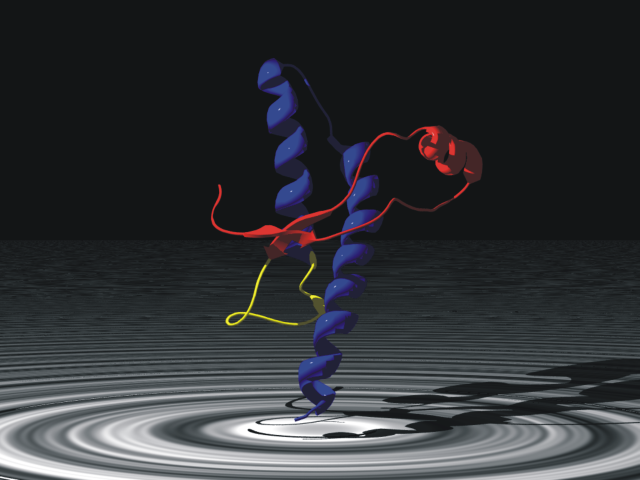
Returning to the fingerprints of the title, one Y13 student is asking the question, why do we have different fingerprints, and why indeed do identical twins also have non-identical prints? This is at the heart of epigenetics, when presumably differences in local concentrations of small molecules re-programme the genotype to produce a new phenotype. It was actually over 60 years ago that the famous mathematician, Alan Turing, proposed a simplified model, referred to as the reaction-diffusion system in which he proposed that morphogenesis resulted from the coming together of environmental chemistry and genetics (often referred to as chemical biology). Simple physical laws underpin complex biological events (see top LHS). The field of epigenetics is emerging as an important direction for anti cancer drug discovery and for me, illustrates how serendipity (searching for a molecular understanding of an interesting aspect of nucleic acid biochemistry) can have a major impact on medicine. 

Finally, if you think this is interesting, one of the recent acquisitions in the Institute of Integrative Biology's Centre for Genomic Research in our sponsoring institute, the University of Liverpool, is a new generation gene sequencer manufactured by Pacific Biotechnology. Already Rich Robert's group (see Rich talking recently about the work, RHS) at New England Biolabs have shown that this methodology can not only read the As, Cs, Gs and Ts of DNA, but the MeCs and MeAs, and with it will be a new era of methylome analysis as we unlock the link between our genes and our environment across entire genomes. Exciting times for us all I think ! 

Sunday, 7 September 2014

Understanding partnerships with our partners at the UTC

At the UTC, we are here to listen to our partners, the future employers and educators of our students, and to embed their values into the enrichment opportunities for our students. We are all delighted at the recent announcement by RedX Pharma that they have signed a lucrative "deal" with Astra Zeneca a company that has its origins in Merseyside and Sweden, but whose reach is now firmly global. From its origins in the pioneering days of the Chemical Industry, Imperial Chemical Industries (ICI), formed from the union of a diverse array of chemical manufacturers, was split into a number of separate entities, one of which, Zeneca merged shortly after (in 1999) with the Swedish drug company Astra, to produce one of the most successful pharmaceutical companies of the last decade right here in the North West (AZ has bases all over the world, but Alderley Park was, until recently a significant centre of operations in the drug development world). The announcement of the "deal" between AZ and RedX Oncology (where many of our students have enjoyed challenging and fulfilling placements over the year) can only be excellent news for the UTC and the region in general. It is a story, that has its origins over many years of pioneering start-ups, collaborations, mergers, acquisitions and it is mirrored by the partnerships and interactions that take place between molecules in the body that have been targeted for therapy.


Photo of Liverpool Life Sciences University Technical College students wearing Redx Pharma lab coats while they workYou may recall Phil Ingham's blog earlier in the year, in which he described the hedgehog pathway drug discovery programme that he has been involved in (which has led to the new anti cancer drug Vismodegib). Molecules in this "domain" of cellular and developmental biology have also provided a focus for efforts at RedX oncology and AZ. The Hedgehog pathway (as Phil discussed earlier: search for Phil Ingham in the Google Blog Search field, RHS) involves a cascade of interactions, or partnerships, which modulate the function of the downstream protein(s) leading to the triggering of a major cellular and sometimes tissue changes. These pathways are at fault in some diseases, or can be redirected to help restore otherwise "broken" biological functions. One of the characteristics of signalling pathways of this kind is that the proteins are often in tiny quantities, are difficult to work with because they tend to be insoluble and/or unstable in vitro: the fact that they are also chemically modified by enzymes (we refer to this as post-translational modification, or PTM for short), makes them challenging in terms of analysis. Nevertheless, as we have learnt over the last 30 years in particular, the road leading to an understanding of cancer (through work on the molecular biology of oncogenes and tumour suppressors) is paved with major challenges. However, the opportunity for UTC students to play a part, however small, in this important journey, with the support of partners like RedX Pharma is one of the reasons why the UTC vision is so powerful for young scientists.

Tuesday, 2 September 2014

Malaria, Cancer, Alzheimer's, Influenza, Measles, Ebola, AIDS, Cystic Fibrosis.....How do we decide what to investigate?

As you start your new year at the UTC, you will be no doubt be aware of the theme that will pervade the first half term: the Global Challenge of Malaria. I am sure that most of you will have a picture in your mind of African villagers dealing with a health crisis in challenging circumstances. I wont think of the prospect of catching malaria while you sleep in your own bed, but you might wonder if you are likely to catch measles from a classmate, or more likely the flu or a cold. We know that certain diseases are restricted to some parts of the world (by restricted I should really say that they are much more prevalent), some are dangerous to infants and some, like Alzheimer's disease are rarely found in adults under the age of 60. It is really important that you develop a perspective on the "significance" of a health problem. This is the theme of this Blog: I want you to be able to decide for yourselves with evidence, which areas of Medicine and Science are important. I also want to alert you to the ways in which new discoveries arise, the impact they might have on the quality of our own and the lives of others across the world. I also want you to understand why sometimes we need to investigate things out of pure curiosity, since it is from this route that many of our current technologies arose in the first place. However, ultimately, research costs money and it is the tax payer that decides how much money we invest in research. And as Benjamin Franklin said: "In this world nothing can be said to be certain, except death and taxes".

The scale of a health problem often dictates the priority given to research and financial investment. As a new University lecturer, a Head of Department will have recruited you partly because you have impressed at interview, but increasingly because you are working on a problem that is seen to be fundable. So what are the priorities of the UK funding agencies? Life Sciences in Universities and Research Institutes in the UK are funded by the Biotechnology and Biological Sciences Research Council (BBSRC), the Medical Research Council (MRC), the Natural and Environmental Research Council (NERC) and the Wellcome Trust. There are differences in their priorities but they all agree that Human and Animal Health are a priority, with new antibiotics and resistance mechanisms, together with ageing research, receiving a great deal of attention. Cancer Research is the primary focus of Cancer Research UK (CRUK), with different Research Centres specializing in the various forms of cancer, eg lung cancer, bowel cancer, pancreatic cancer etc. You will notice that I haven't mentioned malaria or ebola. This is where the challenge of obtaining funding becomes more complex. 

The history of Tropical Disease Research in the UK is an interesting one, and one in which Liverpool has been centre stage. Over 100 years ago, shipping merchants who relied on the health of their crew for their business successes, identified "tropical diseases" as a major threat. In those days Britain's influence was just as global as it is today, but it was in the context of the British Empire, which required a radically new solution for protecting the health of commonwealth citizens, and in particular the various professionals and troops who governed countries that became lucrative sources of produce and raw materials for the increasingly industrialised "West". This led to the foundation of the Liverpool and then London Schools for studying and developing methods for preventing and treating rare, Tropical Diseases. These institutions were also critical in supporting the health of the armed forces during the two major (and many minor) wars of the last century.Today, they play a key role in both educating and providing advice to international organisations such as the World Health Organization as well as controlling the global spread of such diseases, in the context of international travel which is now commonplace in the West. In short the stability of the population of the world as a whole isn't a National issue, it is global.

We mustn't just consider research funding at academic institutions. What are the economic factors behind the growth of the Pharmaceutical sector into one of Britain's largest employers and most successful businesses? (I have touched on this issue elsewhere on these pages, and at my Molecules to Market Blog page). Clearly, just like any other "for-profit" business, a drug company must make sufficient money from the whole process of drug discovery from sales, and this is determined by the cost of development, meeting the regulatory requirements (through clinical trials) and subsequently marketing the drug at a suitable price. Given that the cost of bringing a drug to market can be several billion dollars, the pharmaceutical industry is in many ways a challenging one. It may not surprise you to learn that the focus for new drugs is driven by market size and ability of that population to pay for such high cost new drugs. It is thanks to major interventions by high profile advocates like Bill Gates, that diseases like malaria are now on the agenda of drug companies who would otherwise see malaria treatment as a high risk market.

So research into diseases is driven in part my national and international agenda in different ways and in addition, we rely on the drug companies to find ways of short circuiting the discovery and development phases, in order to keep their costs down. What room is there for serendipity in Life Science research? In respect of diseases, the work on ebola, that I discussed in my previous blog illustrates how a disease caused by a potent virus has begun to unearth new concepts in fundamental molecular biology. The disease affects a very small number of individuals annually, and is a very minor cause of death in comparative terms. It would therefore be unlikely to receive the same kind of funding as cancer research. Nevertheless, I think the work on ebola illustrates that if your ideas are sound and creative, it is still possible to attract the necessary funding, in the right environment, to make important, non-mainstream, fundamental discoveries. It is important for you as our future scientists that you are as well informed as possible, not only about how to do experiments, but why they should be done and to be aware of the forces that drive scientific discovery and remember as Louis Pasteur said: "Chance favours only the prepared mind".

Sunday, 31 August 2014

Welcome to the new intake of students and welcome back Y11s and 13s!

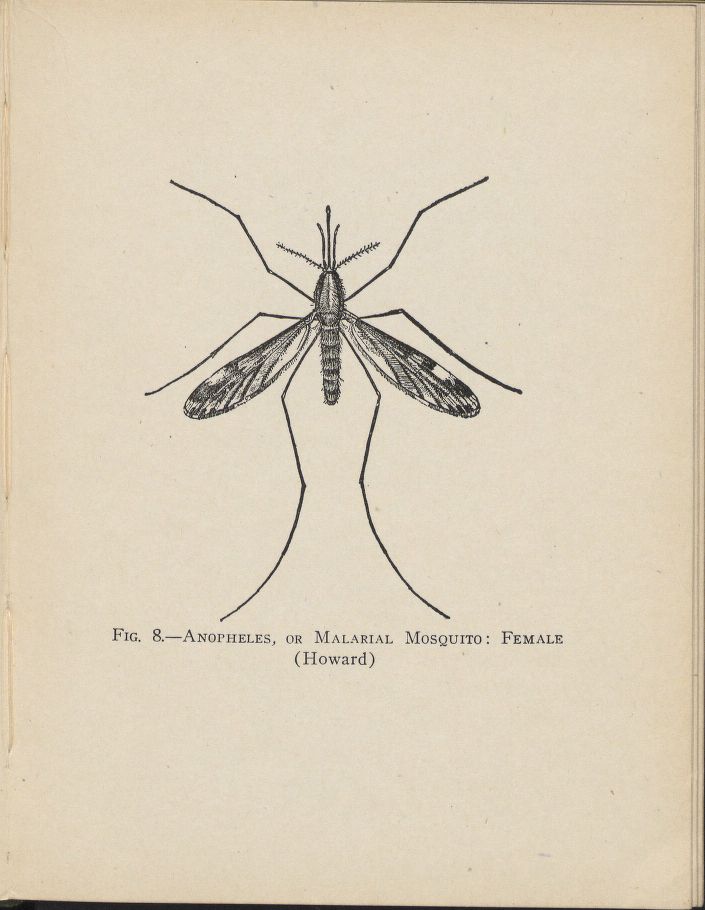
This week sees the UTC operating with a "full house" for the first time and I thought I would take this opportunity to welcome you all to the Innovation Blog site, where the activities in the lab and in the wider world of Science are discussed to help you on your journey. My blog allows me to pass on news and thoughts, but it also contains a regular feature: "Molecule of the Month", in which I choose a mixture of topical and fundamental molecules that form an important part of understanding Molecular Biology. You can flick through earlier blogs on the right (RHS) to give you a taste of the kinds of topics discussed. Please pass on the link to friends and family so they too, can see what is going on. I will be posting on the theme for the first half term this week, which centres on the global threat posed by Malaria (the red colour on the globe, top left), and how Science, Medicine, Healthcare and Economics  are being mobilised to address this threat to mankind.

I look forward to your feedback!

Tuesday, 26 August 2014

Lessons in fundamental Biology from infectious diseases. Ebola part 2


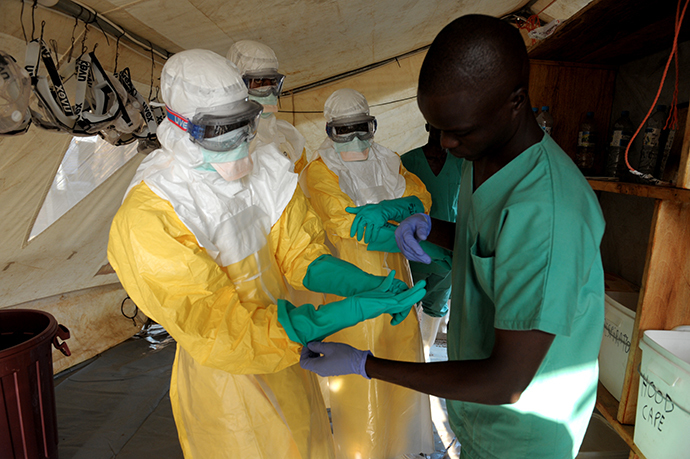
You will no doubt be aware of the developments over the Ebola outbreak in Africa. The arrival of a British nurse back in the UK after contracting the virus, in a high-tech plastic tent (LHS), reinforces the fear associated with such diseases. However, it also serves to highlight the ignorance that pervades about infectious diseases: from simple hygiene, through politics and cultural diversity, to our understanding of the molecular basis of viral and bacterial infections. I want to use this Blog however to draw your attention to the lessons we can learn form such devastating diseases and infectious agents. 

Christian B. AnfinsenIn 1972, Christian B. Anfinsen (RHS) received a share in the Nobel Prize for Chemistry "for his work on ribonuclease, especially concerning the connection between the amino acid sequence and the biologically active conformation". Anfinsen and his colleagues proposed, through a series of elegant experiments, that the information encoded by the primary structure of a polypeptide (i.e. the sequence of amino acids in a protein), determined the three dimensional structure of a given protein. Therefore, if chemical structure determines function, then the amino acid sequence will determine biological function. This is the basis of much of our interpretation of genome data, when we associate the sequence of a gene with its deduced amino acid sequence and then its function. This relationship between primary structure and biological function (or rather conformation) is called the "Thermodynamic hypothesis" or "Anfinsen's dogma" and it has stood the test of time rather well. There are two important caveats: some proteins need a little help along the way to fold into their stable conformation in good time; this is facilitated by a class of proteins called "Chaperones". Secondly, the protein sequence encoded by the gene is not always the same as the sequence of the mature protein, in its functional form. However, I am not going to discuss these two important issues today.

To out the problem a protein faces into some perspective, imagine a polymer chain of 100 amino acids (this logic applies to any polymer) in which there are 99 peptide bonds (linking the amino acids together). Each peptide unit has two bonds around which there is freedom of rotation (I will show you this with a molecular model in the lab): they are called phi and psi (see here for more detail). The probability of the protein "sampling" all of the possible conformations (or as it is referred to: "conformational space"), is so high in terms of possibilities, that it led Cyrus Levinthal in 1969 to suggest that this paradox must imply that protein folding is in some way "guided", since to sample all options would take a time that is longer than that of our Universe. Since E.coli, as I always remind you can complete the process of replication in around 20 minutes, during which time all of its functional proteins will have been expressed, properly assembled and will have completed their function. This poses an interesting question for the biophysicist to explain!

Anfinsen has demonstrated that proteins have a unique conformation that is necessary for function. But what if the protein could adopt two structures with very similar thermodynamic properties? This possibility seems to exist for the prion protein (of mad cow fame). Here, the protein shown right, adopts a stable form which is found in many cells in a normal individual, but which equilibrates to a misfolded (or infectious form) which is also stable. Currently, there is no reason to pin diseases such as scrapie and CJD on anything other than a misfolded protein, which in turn promotes the conversion of the safe prion structure to the infectious form. In short prions defy Anfinsen: there are two acceptable folded states: one is harmless and the other infectious. If we look at the literature in the first half of the 1960s, we also find some landmark work on the ability of proteins to adopt more than one conformation, specifically following the addition of a small molecule. The work of Monod, Wyman and Changeux in France and Koshland Nemethy and Filmer in the US, supported by Max Perutz's elegant structural studies on Haemoglobin at Cambridge, had opened the door for a new way of thinking about proteins and their control (I wont cover post-translational modification here). This work simply shows that a stable conformation can be shifted in the presence of a ligand, but a single (energetically) stable conformation exists in the absence of the ligand (under a give set of conditions). We refer to this as allostery.

Figure thumbnail fx1When I heard the news about Ebola, I looked up the work of Erica Ollman Saphire, a name that is both unusual, and memorable! One of my old friends from my early days at Sheffield, now at the Scripps Institute in California had published jointly with Erica. I realised that the protein VP40 (called a viral matrix protein) also defied Anfinsen! Using X-ray crystallography, Saphire's group showed recently in a lovely paper in Cell, that VP40 is capable of forming different stable conformations for the infection and replication stages of its life cycle. Put simply, it is able to economise on function by making use of the same primary structure. Similarities jump out in respect of prion diseases, but also begin to pull the rug away from long in the tooth Biochemists like me! Of course, when you read the work, it becomes clear a priori, that conformational equilibria needn't always be to the left or right, but that the sustainable evolution of protein function will make such phenomena the exception rather than the rule.

I recall over a year ago Dr Robert Harrison at the Liverpool School of Tropical Medicine telling me how a relatively small number of proteins in snake venom could immobilise an adult in minutes through haematological or neurological mechanisms. I thought this was pretty amazing. But Ebola virus has only 7 proteins with which to disable a human being who will typically express around 20 000 genes in a complex, interrelated and highly regulated manner! By drawing on this knowledge, perhaps we can turn these potential killers into drugs for the elimination of tumours? In the case of ZMapp (shown as a molecular model on the RHS), the antiserum that was supplied in advance of human trials, was produced, somewhat ironically from transgenic tobacco leaves. It is a cocktail of three humanized monoclonal antibodies raised against key viral components. At the moment the details are sensitive, but the fundamental work of Saphire and colleagues elsewhere, as well as the development of plants for the expression of therapeutic antibodies shows how powerful Science can be in facing a health crisis. In my view this is a shining example of how fundamental research on challenging areas of Biology can be justified and must be supported by countries in the developing world. Since we are as a community of Scientists struggling to identify new therapeutic strategies for infectious diseases, work on pathogens should be prioritized, since they have Darwin on their side and can teach us new tricks that could in turn be our salvation!

Wednesday, 13 August 2014

From Malaria, AIDS and Ebola, may Good Science deliver us


The title of this blog refers to the line in the Beggar's Litany from around 1600, which I am fond of quoting to my many Yorkshire friends and colleagues:

"From Hull, Hell and Halifax, may the Good Lord deliver me"


The guillotine was in use regularly in Halifax over 400 years ago: not just in Republican France! In fact it was used by the monarchy (well the Royal Mint) to stamp out counterfeiting. When I have time I will tell you about Sir Isaac Newton's other job for the Royal Mint! Getting back to diseases....You will all be aware of the human tragedy playing out on the West coast of Africa, where over a thousand people, young and old have died following infection by the Ebola virus. The outbreak is all too familiar to some of us who watched as the AIDS/HIV story played out in the 1980s

And of course until very recently, Malaria held the inauspicious position as the world's biggest killer. The World Health Organisation (WHO) have only recently determined that Malaria has been overtaken by by cardiovascular disease (that's a topic for later!). Nevertheless, despite the many advances in modern medicine the human race remains highly vulnerable to parasitic diseases and viral infections. I constantly keep thinking that Achilles at least had only two heels that removed his invincibility in battle!

Students returning and newcomers to the UTC will be "welcomed" by an ambitious thematic programme that incorporates experimental classes and enrichment in the Innovation Labs, aimed at providing you with the opportunity to build your scientific skills both technically and intellectually around some of the most challenging Health related problems facing the world today. Before I give you a taster of what is coming, let me say a few words about Ebola virus since it is in the news at the moment.

The picture on the left is one that the BBC are using a lot at the moment. It is a very high magnification image of ebola virus, which has been coloured artificially to enhance our understanding of its properties. Compared with the bacteriophage particles that we have come to know and love (humour me!), the shape is odd, it is more like an elongated bacillus, or rod-shaped bacterium, it is about 10% of the length of many mammalian cells, so it is pretty long. (the AIDS virus (below right, the green spiky sphere ) is quite different, almost spherical with a typical radius of 100nm, which is 10 times shorter than the length of ebola. A typical cell is around 10 000nm. Both viruses have an RNA genome, which means they have to trick the host cell into converting the genome into DNA first before they can begin to replicate, assemble and produce more infectious viral particles. 

The ebola virus has only 7 genes, making it a very efficient beast! The AIDS virus has a few more. The closest relative of ebola is called Marburg virus, which is equally lethal. Why then can these viruses cause so much of a problem. There are two main reasons, one is Biological, but the second reason is just as important, if not more critical and that is Cultural practices. The virus attaches to cells found in the blood stream, fusing with the membrane and then executing a prolific programme of gene expression and replication, leading to an explosive infection that gives rise to a massive bleeding episode, from which recovery is challenging. 

From a cultural perspective, the virus is spread through contaminated food: fruit bats are ebola resistant and therefore they spread the virus through fruit and droppings. Equally, infected animals eaten as "bush meat" are also sources of infection. Finally, families in the major hot spots in Africa have a culture in which sick members of the family are cared for at home, increasing the risk of spread. Poor education and even worse poor adherence to what we would consider normal hygiene routines, is probably at the heart of the spread of infection. The combination of the speed of pathology and the habits of the victims makes ebola, like AIDS before it a major challenge. You may be aware of the difficulty in persuading families to sleep under insecticide treated bed-nets, which would dramatically improve the prevention of malaria! So you must consider these diseases from both the Science and Social aspects.You must decide whether you think it is only appropriate to develop drugs and vaccines that are cost effective, typically for use in the West. In contrast, these potent diseases are prevalent in the poorest parts of the world, consequently resources are generally mobilised after a crisis! Compare that with the recent reaction to swine flu in the UK. If you are interested take a look at web sites like the Bill and Melinda Gates Foundation for more information.

The programme that awaits you at the UTC in September will give you an introduction to the Biology of parasites and infectious diseases, the socio-economic aspects and the opportunity to develop your laboratory skills by exploring model systems first hand. It is through these approaches that we have begun to understand the disease mechanisms, the interplay of their genomes and, importantly, to set some of you on the road to discovering a new generation of treatments for these virulent diseases. I am looking forward to helping you on this journey soon!