The title of this blog refers to the line in
the Beggar's Litany from around 1600, which I am fond of quoting to my many Yorkshire friends and
colleagues:
The title of this blog refers to the line in
the Beggar's Litany from around 1600, which I am fond of quoting to my many Yorkshire friends and
colleagues:
"From Hull, Hell and Halifax, may the Good Lord
deliver me"
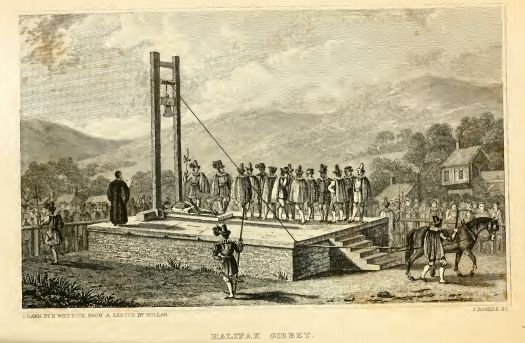
The guillotine was in use regularly in Halifax over 400 years ago:
not just in Republican France! In fact it was used by the monarchy (well the
Royal Mint) to stamp out counterfeiting. When I have time I will tell you
about Sir Isaac Newton's other job for the Royal Mint! Getting back to
diseases....You will all be aware of the human tragedy playing out on the West
coast of Africa, where over a thousand people, young and
old have died following infection by the Ebola virus. The outbreak is all too
familiar to some of us who watched as the AIDS/HIV story played out in the
1980s
 And of course until very recently, Malaria held the inauspicious position as the world's biggest killer. The World Health Organisation (WHO) have only recently determined that Malaria has been overtaken by by cardiovascular disease (that's a topic for later!). Nevertheless, despite the many advances in modern medicine the human race remains highly vulnerable to parasitic diseases and viral infections. I constantly keep thinking that Achilles at least had only two heels that removed his invincibility in battle!

Students returning and newcomers to the UTC
will be "welcomed" by an ambitious thematic programme that
incorporates experimental classes and enrichment in the Innovation Labs, aimed
at providing you with the opportunity to build your scientific skills both
technically and intellectually around some of the most challenging Health
related problems facing the world today. Before I give you a taster of what is
coming, let me say a few words about Ebola virus since it is in the news at the
moment.
 The picture on the left is one that the BBC are using a lot at the moment. It is a very high magnification image of ebola virus, which has been coloured artificially to enhance our understanding of its properties. Compared with the bacteriophage particles that we have come to know and love (humour me!), the shape is odd, it is more like an elongated bacillus, or rod-shaped bacterium, it is about 10% of the length of many mammalian cells, so it is pretty long. (the AIDS virus (below right, the green spiky sphere ) is quite different, almost spherical with a typical radius of 100nm, which is 10 times shorter than the length of ebola. A typical cell is around 10 000nm. Both viruses have an RNA genome, which means they have to trick the host cell into converting the genome into DNA first before they can begin to replicate, assemble and produce more infectious viral particles.

The ebola virus has only 7 genes, making it a very efficient beast! The AIDS virus has a few more. The closest relative of ebola is called Marburg virus, which is equally lethal. Why then can these viruses cause so much of a problem. There are two main reasons, one is Biological, but the second reason is just as important, if not more critical and that is Cultural practices. The virus attaches to cells found in the blood stream, fusing with the membrane and then executing a prolific programme of gene expression and replication, leading to an explosive infection that gives rise to a massive bleeding episode, from which recovery is challenging.
 From a cultural perspective, the virus is spread through contaminated food: fruit bats are ebola resistant and therefore they spread the virus through fruit and droppings. Equally, infected animals eaten as "bush meat" are also sources of infection. Finally, families in the major hot spots in Africa have a culture in which sick members of the family are cared for at home, increasing the risk of spread. Poor education and even worse poor adherence to what we would consider normal hygiene routines, is probably at the heart of the spread of infection. The combination of the speed of pathology and the habits of the victims makes ebola, like AIDS before it a major challenge. You may be aware of the difficulty in persuading families to sleep under insecticide treated bed-nets, which would dramatically improve the prevention of malaria! So you must consider these diseases from both the Science and Social aspects.You must decide whether you think it is only appropriate to develop drugs and vaccines that are cost effective, typically for use in the West. In contrast, these potent diseases are prevalent in the poorest parts of the world, consequently resources are generally mobilised after a crisis! Compare that with the recent reaction to swine flu in the UK. If you are interested take a look at web sites like the Bill and Melinda Gates Foundation for more information.
The programme that awaits you at the UTC in September will give you an introduction to the Biology of parasites and infectious diseases, the socio-economic aspects and the opportunity to develop your laboratory skills by exploring model systems first hand. It is through these approaches that we have begun to understand the disease mechanisms, the interplay of their genomes and, importantly, to set some of you on the road to discovering a new generation of treatments for these virulent diseases. I am looking forward to helping you on this journey soon!
 As you start your new year at the UTC, you will be no doubt be aware of the theme that will pervade the first half term: the Global Challenge of Malaria. I am sure that most of you will have a picture in your mind of African villagers dealing with a health crisis in challenging circumstances. I wont think of the prospect of catching malaria while you sleep in your own bed, but you might wonder if you are likely to catch measles from a classmate, or more likely the flu or a cold. We know that certain diseases are restricted to some parts of the world (by restricted I should really say that they are much more prevalent), some are dangerous to infants and some, like Alzheimer's disease are rarely found in adults under the age of 60. It is really important that you develop a perspective on the "significance" of a health problem. This is the theme of this Blog: I want you to be able to decide for yourselves with evidence, which areas of Medicine and Science are important. I also want to alert you to the ways in which new discoveries arise, the impact they might have on the quality of our own and the lives of others across the world. I also want you to understand why sometimes we need to investigate things out of pure curiosity, since it is from this route that many of our current technologies arose in the first place. However, ultimately, research costs money and it is the tax payer that decides how much money we invest in research. And as Benjamin Franklin said: "In this world nothing can be said to be certain, except death and taxes".
 The scale of a health problem often dictates the priority given to research and financial investment. As a new University lecturer, a Head of Department will have recruited you partly because you have impressed at interview, but increasingly because you are working on a problem that is seen to be fundable. So what are the priorities of the UK funding agencies? Life Sciences in Universities and Research Institutes in the UK are funded by the Biotechnology and Biological Sciences Research Council (BBSRC), the Medical Research Council (MRC), the Natural and Environmental Research Council (NERC) and the Wellcome Trust. There are differences in their priorities but they all agree that Human and Animal Health are a priority, with new antibiotics and resistance mechanisms, together with ageing research, receiving a great deal of attention. Cancer Research is the primary focus of Cancer Research UK (CRUK), with different Research Centres specializing in the various forms of cancer, eg lung cancer, bowel cancer, pancreatic cancer etc. You will notice that I haven't mentioned malaria or ebola. This is where the challenge of obtaining funding becomes more complex.
 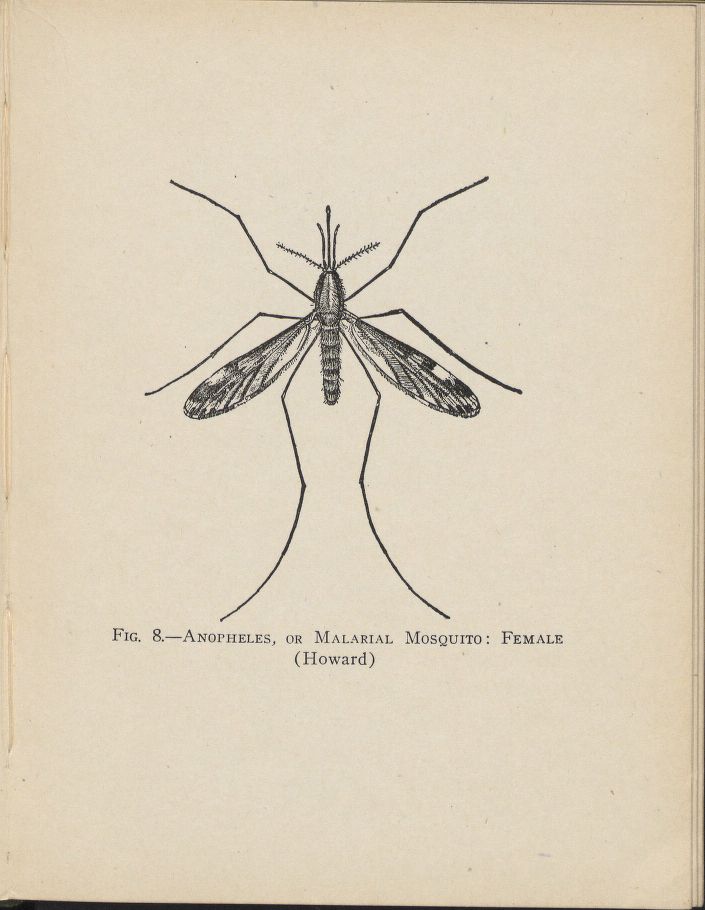 The history of Tropical Disease Research in the UK is an interesting one, and one in which Liverpool has been centre stage. Over 100 years ago, shipping merchants who relied on the health of their crew for their business successes, identified "tropical diseases" as a major threat. In those days Britain's influence was just as global as it is today, but it was in the context of the British Empire, which required a radically new solution for protecting the health of commonwealth citizens, and in particular the various professionals and troops who governed countries that became lucrative sources of produce and raw materials for the increasingly industrialised "West". This led to the foundation of the Liverpool and then London Schools for studying and developing methods for preventing and treating rare, Tropical Diseases. These institutions were also critical in supporting the health of the armed forces during the two major (and many minor) wars of the last century.Today, they play a key role in both educating and providing advice to international organisations such as the World Health Organization as well as controlling the global spread of such diseases, in the context of international travel which is now commonplace in the West. In short the stability of the population of the world as a whole isn't a National issue, it is global.
 We mustn't just consider research funding at academic institutions. What are the economic factors behind the growth of the Pharmaceutical sector into one of Britain's largest employers and most successful businesses? (I have touched on this issue elsewhere on these pages, and at my Molecules to Market Blog page). Clearly, just like any other "for-profit" business, a drug company must make sufficient money from the whole process of drug discovery from sales, and this is determined by the cost of development, meeting the regulatory requirements (through clinical trials) and subsequently marketing the drug at a suitable price. Given that the cost of bringing a drug to market can be several billion dollars, the pharmaceutical industry is in many ways a challenging one. It may not surprise you to learn that the focus for new drugs is driven by market size and ability of that population to pay for such high cost new drugs. It is thanks to major interventions by high profile advocates like Bill Gates, that diseases like malaria are now on the agenda of drug companies who would otherwise see malaria treatment as a high risk market.
 So research into diseases is driven in part my national and international agenda in different ways and in addition, we rely on the drug companies to find ways of short circuiting the discovery and development phases, in order to keep their costs down. What room is there for serendipity in Life Science research? In respect of diseases, the work on ebola, that I discussed in my previous blog illustrates how a disease caused by a potent virus has begun to unearth new concepts in fundamental molecular biology. The disease affects a very small number of individuals annually, and is a very minor cause of death in comparative terms. It would therefore be unlikely to receive the same kind of funding as cancer research. Nevertheless, I think the work on ebola illustrates that if your ideas are sound and creative, it is still possible to attract the necessary funding, in the right environment, to make important, non-mainstream, fundamental discoveries. It is important for you as our future scientists that you are as well informed as possible, not only about how to do experiments, but why they should be done and to be aware of the forces that drive scientific discovery and remember as Louis Pasteur said: "Chance favours only the prepared mind".