Saturday, 29 November 2014

Prostaglandins: Molecule(s) of the month for December

I was driving to Liverpool a few days ago listening to the first part of the annual BBC Radio, Reith Lectures. In fact I was probably at the same point on Edge Lane, when I was struck by Grayson Perry's disruptive, irreverent and insightful take on the art world last year. This year, Dr. Atul Gawande is tackling the topic of contemporary medicine and in his first lecture, he posed the question: Why do doctors fail? In his moving description of his son's encounter with the medical profession, he mentioned the use of a class of drugs based on the prostaglandins. In the case of his son, Walker; an early tragedy was averted by the doctor's administration of Prostaglandin E1. This prevented closure of the patent ductus arteriosus in the newly born, Walker, had symptoms of a cyanotic (Gk dark blue colour) heart defect (the skin has a blue/purple colouration, owing to a deficiency in the supply of oxygenated blood, for which there are a number of causes). It made me think that prostaglandins (PGs) are often overlooked in mainstream Biochemistry courses, and yet they are a potent class of molecules. This is an attempt to whet your appetite for the prostaglandins!


Prostaglandins are derived enzymatically from essential fatty acids: they are 20 carbon molecules with a 5-membered ring, as shown on the RHS for Prostaglandin E1 (or Alprostadil). The enzyme Phospholipase A2, converts diacylglycerol to arachidonic acid, which in turn is converted to the prostaglandins by the enzyme called cyclooxygenase (or COX, for short). The main function of COX is to catalyse the formation of the "signature" ring, found in all prostaglandins, through ring closure and the addition of oxygen. You may have come across these enzymes, since they are the targets of one of the most
commonly taken drugs, aspirin. The mechanism of action of aspirin, lies in its irreversible acetylation of a key Serine side chain in the COX enzyme. Other pain killers/anti inflammatories, such as ibuprofen act on the same target, but are reversible (ie non-covalent) inhibitors. This work was recognised by the award of a Nobel Prize in 1982 to (Sir) John Vane, along with two others. The structure of aspirin (purple) is shown in the active site of a COX enzyme on the LHS. The Serine at position is acetylated as the aspirin molecule is hydrolysed in the active site. As a result, arachidonic acid is now prevented from entering the active site of the enzyme and consequently no PGs can be synthesised. 

There are around 10 receptors that specifically recognise and mediate the potent effects of PGs. These interactions are in turn "transduced" by G-protein coupled receptors (GPCRs, shown on the RHS) leading to reprogramming of normal hormonal responses, contraction and dilation of smooth muscle cells and a wide range of other physiological effects. We do not yet have a high resolution structure of the PG receptors, but I am sure it wont be long. The interest from my perspective, is in a compound class that is so potent. It reminds me of the story surrounding thalidomide, which you can read in an earlier Blog. The combination of the hydrophobicity, the structurally constraining ring and the oxygen atoms, give PGs their potency, when coupled to the GPCR pathways. But, as a simple biochemist, the challenges brought by working in the lab with such insoluble molecules, make me think I took the easy route early in my career by choosing amino acid dehydrogenases and DNA modifying enzymes, where everything can be carried out in the aqueous phase. Now, every time you take an aspirin, think of the molecular pharmacological events that you have triggered!

Saturday, 8 November 2014

Jack's project first steps: just a phase we are going through!

I thought it might be helpful to other students (and Jack and me!) to share some thoughts on the Y13 lab projects. I shall work through them all, but since it is on my mind, I thought I would say a few words about Jack Condron's project. Jack asked if he could develop a device for cleaning contaminated drinking water. His idea was to create a cheap and simple solution for helping solve one of the major challenges in developing countries: access to clean drinking water. A laudable ambition, and one that has and continues to occupy the minds of many scientists, engineers in both research organisations and commercial organisations. One patent image is shown on the LHS. The key to this project is simplicity and a solution that is independent of any power supply: i.e. purification might result from a shake or a hand operated mini-pump.

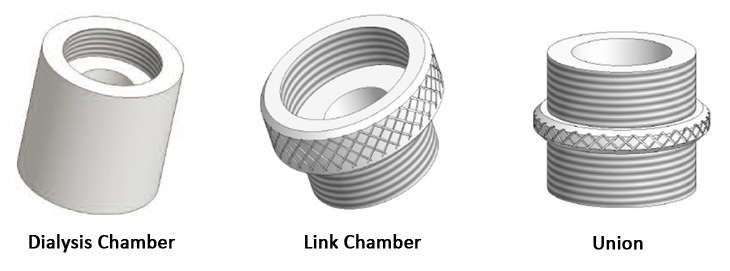
The first thing to point out is that Jack's initial thoughts, combined with his determination and drive was enough to get me behind him. We then started thinking about "proof of concept" experiments, the need for certain materials and reagents and in particular how we might "mimic" the system we are trying to develop. One of the great things about the UTC's Innovation Labs is the access we have to a 3D printer, and, more importantly, George Rule's ingenuity. So, Jack and George created a small "printed" chamber for testing the extraction of water from a "dirty" mixture. I have shown a competing design above, Jack's design is currently our in house design and will remain undisclosed for now. In simple terms, Jack's design comprises, two, 2ml compartments that can be connected, with a dialysis membrane providing an interface. This will allow us to establish whether our "chemistry" can achieve the desired result.

We sat down and thought about the model experimental system and our through our discussions it became clear that "phase transitions" and an understanding of solubility of molecules in water and organic solvents was only superficially taught at A level. Moreover, the use of a simple and safe polymer for creating phases, such as polyethylene glycol (PEG, for short), was also something for which a strong theoretical base was off curriculum. At this point Jack was beginning to wonder what had happened to his desire to save lives! (Me too!). I then thought, we need to "see" the movement of contaminating species between phases and across membranes. We needed a dye that was water insoluble, but reasonably soluble in ethanol and polyethylene glycol. Orcein, came to the rescue (top LHS).

We now have water, orcein, ethanol, PEG (at three mean molecular weight lengths), an experimental chamber and a water soluble dye (still under investigation). Jack also, threw in bleach tablets for good measure, thinking about the use of calcium hypochlorite (top RHS) for water purification, and as a compound that we might need to eliminate. So we now have to understand not only the physical chemistry of such mixtures, but also the reactivity of a strong oxidising agent as well. 

Jack has been exploring how these molecules behave in solution when mixed in a range of combinations. We are on a journey rich in chemistry and one that seems to be taking us farther and farther away from the end point, but (I like to think) deeper and deeper into fundamental chemistry. The visual demonstration of PEG:water phases (used to drive counter current distribution separation technology), the mixing of ethanol in water and the differential partitioning of dyes has been the first "learning" phase (sorry!). Jack has already noted that polymer length (PEG is shown top LHS) can also influence the absorbance maximum of the dye (purple to red shifts are reproducibly obtained). Dye precipitation at water PEG interfaces can be followed with time and then of course there is the observed "bleaching" of absorbance caused by the bleaching tablets. Does "bleach" affect all 8 component of the dye? Can we explain the bleaching of polyaromatic dyes and does the same phenomenon occur with similar water soluble polyaromatic dyes?

How does this help us with the initial aim? Well it helps us in many ways. First and foremost it is training a young enthusiastic scientist at the UTC, how challenging research can be, even when the problem seems (at face value) so simple. It is providing Jack with a terrific foundation in the relationship between pure and applied chemistry and empowering him as an investigative scientist. The fact that he is a Y13 student at the UTC, constantly amazes me! Jack is at an early stage in the project and I shall follow up at Christmas with project and he will write the third and final blog!

To follow, Kelly's project: fingerprints, identical twins, epigenetics and Alan Turing's legacy.

Thursday, 6 November 2014

How the BLAST rendered me speechless today. Molecule of the month November 2014 FOXP2

I started this Blog, intending to look at the properties of gunpowder, but remembered I had discussed dynamite in October, so two explosive molecules in the same number of months, seems a little excessive! Then I started writing about Cytochrome P450s, but although I was ready to go with the P450 story, I realised how nicely the FOXP2 protein structure, function and genetics fitted together in the BLAST sessions today. So, P450 for Christmas and FOXP2 for November. This is a story that might leave you speechless!

The human genome project has proved a treasure trove for evolutionary biologists, and a quick search of a well known gene encoding say haemoglobin or a histone protein, will inevitably identify a closely related sequence in chimpanzees, orang utans or another ape. So far not surprising. However, I then asked the question: what genes would you expect to point to differences between man and apes? I was delighted when someone gave the answer "communication" genes. So of course I suggested an analysis of the "language" gene, FOXP2. 

The FOXP2 protein is a transcription factor (here you can find a lovely summary with simple sketches of transcrition factors in higher organisms) found widely in the genomes of mammals, that is a regulator of neuronal plasticity, with a direct impact on speech and language development. The protein sequence that you all obtained, showed a dominant feature: a run of tens of Q (Glutamine) residues. These are located at the N terminal side of the protein sequence and are not uncommon in some DNA binding proteins. In addition FOXP2 contains a zinc finger and a leucine zipper, both of which are protein sequence motifs, often associated with DNA binding. From a bioinformatics perspective, the FOXP2 sequence is a dead give away! Transcription factors bind to DNA and RNA Polymerases and promote gene transcription (expression). In the case of FOXP2 it regulates the levels of expression of a set of genes involved in language development which are mapped to the brain. The FOXP2 gene, therefore encodes a "master regulator" and mutations to the sequence  of such genes can be disastrous, leading to negative effects on a significant range of "downstream " functions.

Full-size image (74 K)
The protein (shown left in complex with DNA from the work of an international collaboration published in the journal Structure) recognises a specific DNA sequence. There are two amino acid substitutions between the FOXP2 proteins between chimpanzees and man, which appear to interfere with the function of FOXP2 in such a way that the coordinated expression of a family of genes required for speech is not possible in apes. The story was made possible by pioneering work from communication scientists at McGill and London Universities, and geneticists at Oxford University and the UCL in London. From a family with a rare, inherited speech disorder, the region of the chromosome containing the mutation came the first clues. Shortly afterwards, the FOXP2 gene was isolated and, as with apes, the changes in function relate to subtle amino acid differences: you should attempt to rationalise these observations. You will find that FoxP2 from a number of species is highly conserved, but look closely at the features in the protein primary structure. Subtle differences can give rise to profound functional consequences, which makes a powerful case for understanding the details of chemistry, structure and reactivity of amino acid side chains in understanding biological phenomena: in this case language skills!

The FOXP2 gene expresses a protein that regulates the levels of expression of a subset of genes which in turn cascade down information that leads to coordination of brain function leading to controlled action of facial muscles and the larynx, thereby producing speech. It should also be remembered from your BLAST searching that by way of contrast some protein sequences can tolerate significant amino acid changes without loss of function. The critical evaluation of protein sequences is the key to a deep understanding of function, so always treat similarities with a healthy level of scepticism and try to validate ideas by experiment, where possible.

Monday, 27 October 2014

First UTC Scientific Conference Commentary

You will all now be putting your feet up as half term begins, but I thought I would give you a little help in preparing your abstracts and summaries of your favourite seminar from the Malaria Meeting held at the University of Liverpool, last Wednesday in the Muspratt Lecture Theatre (appropriately chosen after one of the founding fathers of Chemistry at the University). 

Just to remind you all (and those who missed it) the running order was as follows:


1.35pm Professor David Hornby, Liverpool Life Sciences UTC
Opening Remarks

1.40pm Dr Alexandre Lawrenson, The Kingsway Academy
Virtual Screening to Identify Novel Antimalarial Chemotypes

2.00pm Emeritus Professor Michael Clarkson, University of Liverpool
Local Mosquitos – My Hobby

2.25pm Professor Paul O’Neill, University of Liverpool
Antimalarial Drug Discovery and Development in Academia

2.45pm Break

2.55pm Rachel Winrow, Liverpool Life Sciences UTC
My experience of Malaria

3.00pm Professor Richard Pleass, Liverpool School of Tropical Medicine
HexaGard: a biomimetic replacement for IVIg therapy

3.20pm The Memusi Foundation Team, Liverpool Life Sciences UTC

3.30pm Dr Mark Paine, Liverpool School of Tropical Medicine
Malaria: Of Men and Mosquitos

3.50pm Gap Medics

4.10pm Alison McGovern, MP
An Economic and Political Perspective on Malaria in Africa

4.30pm Professor Neil Hall, University of Liverpool
Genetics of the Malaria Parasite

4.50pm Professor David Hornby, Liverpool Life Sciences UTC
Closing Remarks

First of all,as an audience (Y12s and 13s) you were exemplary: engaged and, despite the intensity of the session, and the level of many of the talks, you were all an audience to die for. At least that's what all of the visiting speakers asked me to pass on. So incredibly well done! I found your questions to be searching and challenging and your confidence was at a level I rarely see amongst graduates!

So let me give my own synopsis of the talks. I am going to concentrate on the visitors' talks and say something separately about the UTC student talks in a separate Blog. The theme was Malaria, as you all know, but the content varied from Alison McGovern's consideration of our social responsibility as a developed nation in supporting the reduction in deaths from Malaria. Alison's style was more interactive than all of the other speakers and I would ask you to consider looking into the Millennium Goals that she discussed. You can find more information here. Your engagement was excellent, but mostly I hope she stimulated your interest in the important economic, societal and ethical issues she raised. As responsible citizens, when you are able to vote for the first time, you should really follow Alison's advice and inform yourself about the challenges and responsibilities that she discussed in such a lively and passionate manner.

The first seminar of the day was delivered with great clarity by Alex Lawrenson, formerly a PhD student in Paul O'Neill's chemistry lab at the University of Liverpool who has moved through industry before re-surfacing at the Kingsway Academy. Alex explained the frustrations for all pharmaceutical companies in tackling the 15 year barrier to "getting drugs on the market". Clearly, we don't want drugs to be made available before they are thoroughly tested, but 15 years is a long time. Just look at the debate surrounding Ebola treatment at the moment. The suggestion that Alex discussed, with examples drawn from his own research, was to utilise algorithms that search chemical and structural features of "compound libraries" in order to reduce the time taken to identify promising therapeutic molecules. This "in silico" approach utilises software that matches ideas from the medicinal chemist (which include not only the potential steric fit of a compound to its target [often a protein, and in Alex's case a cytochrome], but also its potential toxicity, stability, solubility etc.) in order to limit (or filter) the number of compounds to be screened. It is clear that these approaches are beginning to make a difference and I am looking forward to chatting to Alex further when he visits us at the UTC.

Paul O'Neill followed Alex later in the day, giving us a tour de force of Malaria drug discovery. The most interesting aspect from my perspective was the way in which Paul's group have taken Natural Products, in this case quinine and artemisinin (left), two historic treatments for Malaria, and addressed the challenge of not only improving upon them in an empirical manner (Science speak for systematic trial and error!), but also by using the insight gained from the target for these compounds: our old friend Haemoglobin, the Molecule of the Month in May. Since we have been using conjugated dyes to simplify our chromatography experiments over the last month, you will be familiar with me describing how molecules that are made up of "aromatic" rings are able to absorb visible light as a consequence of the reorganisation of electrons. Well, Paul suggested that the porphyrin ring (the key element of Haem, often written heme) can make highly favourable interactions with the compounds he has been designing and synthesising, inspired by the aforementioned natural products. In fact I went to PubMed to find the affinity constants and was surprised to find work dating back to the early 1980s on quinine interactions with porphyrin (eg Moreau et al (1985)). I'd love to read your thoughts on Paul's talk, since I know some of you found Alex and Paul's talks the most interesting. You should think about the fact, as Paul discussed, that female mosquitoes feed on blood and the accumulation of Haem that results is the drug target. This makes for an interesting story in itself, regarding Malaria and drug resistance mechanisms.

The Wirral's own Lake District
Before I cover the two talks from the Liverpool School of Tropical Medicine (LSTM), I just wanted to mention the seminar that proved to be popular with everyone (in fact, out of 50 students I asked, he was first choice as favourite by 48!). Michael Clarkson's talk proved a delight. He discussed his retirement "hobby" (Michael is Emeritus Professor in Veterinary Science at Liverpool: the title emeritus is conferred upon retired professorial staff who have given distinguished service at their institution, and often remain active in their field): monitoring mosquitoes on the Wirral. I thoroughly enjoyed Michael's delivery and the elegant way he developed his scientific thinking, while keeping us amused at the same time. It was an important addition as well, since he raised the important issue of diversity among insects: not all mosquitoes carry malaria and their life cycle preferences differ in many subtle ways, illustrating the challenges of managing insect borne diseases. This aspect could be something you might want to think about if you choose Michael's talk for your essay. I was also interested in why so many students found Michael so engaging. It wasn't difficult: his relaxed style and his natural enthusiasm combined with his perfect judgement in his use of language to develop his story, all made his presentation, the people's favourite by far.


The two talks from the LSTM illustrated the quite different approaches that form part of the School's strategy for supporting the eradication of Malaria. Richard Pleass described how his lab are manipulating the scaffolds of antibodies in order to understand the fundamental processes in immunity that lead to antigen elimination. As you will recall from my Molecule of the Month in January 2013, the structure of antibodies is broadly a Y shape. Richard described how his team are hijacking and remodelling, the stem of the antibody (called the Fc region) in order to steer the interaction with different classes of receptors. Richard is working with the Biotech sector in order to improve existing treatments for auto-mimmune disease, and these approaches are hopefully set to inform our approach to vaccine design. Mark Paine's group by contrast, bring together the enzymes used by humans to deal with toxic compounds that enter our blood stream, which in insects form part of a suite of defensive mechanisms for combating insecticides. As Mark explained, at the Biochemical level, we know how to kill mosquitoes, but we also know that unregulated (or excessive) exposure of insects to insecticides leads ultimately to "resistance" through mechanisms identical to similar bad practise in the management of antibiotics. Mark was clear that elimination of mosquitoes was his solution, and he explained how the use of bed nets (partly supply, education and politics!) and spraying regimes could be improved by the introduction of simple quality control and quality assurance assays. The importance of pragmatism in combating Malaria was evident in the way Mark combined Science, Education and the logistics and realities of life in those countries where Malaria prevails. It might be interesting for someone to compare and contrast Mark's presentation with Alison's above. 


Finally, Neil Hall presented a riveting account of the road to the Plasmodium genome. Neil moved from the Wellcome Trust Sanger Institute several years ago and heads up the Centre for Genomic Research at the University of Liverpool. As you might expect, such projects involve many people (although Neil's name is easy to spot in the two landmark papers in Nature in 2002!) and the clear advances in technology that have taken place (and continue to do so) are making genome sequencing faster day by day. Neil explained not only the methodology, but the impetus (from a historical context) for addressing Malaria through genomics, specifically discussing the regions of the Plasmodium chromosomes that make the organism such a surface "chameleon". In addition, he explained how a comprehensive knowledge of the entire genome, could address questions that were inconceivable before genomics. The integration of metabolic pathways and the analysis of the evolutionary mechanisms that have led to the peculiar organelles found in Plasmodium whose origins may lie more towards chloroplasts. These ideas would not have been possible without genomics. It is also timely to consider genomics, a Science that is part experimental and increasingly computational. When you return after half term, we shall begin our Bioinformatics project and using search tools provided by the National Center for Biotechnology Information (NCBI) in the USA, we shall be looking at some of the aspects Neil discussed in his excellent closing seminar.

Finally, a reminder: I am after a Scientific Abstract and a separate 1 page description of your chosen seminar for Monday the 3rd November, in the meantime have a good break (in between revision!). 

Tuesday, 21 October 2014

UTC Transmits preview

It's just over a year since the Life Sciences UTC in Liverpool welcomed its first intake of students. Along the way there have been some noteworthy events and achievements, as well as challenges of course. However, tomorrow a group of leading researchers, educators and policy makers, will come together at the University of Liverpool to deliver a programme of talks, that would not look at all out of place at an International Scientific conference. The significance of the event should not be underestimated. It is the culmination of a year of overwhelmingly positive support from our partners in helping us "raise the game" of school level education. Y12 students will be given the opportunity to bring together their curriculum knowledge along with their innovation lab experiences and the broad range of enrichment experiences that are at the heart of the UTC. This new term has seen a thematic focus on Malaria and the challenges facing the world of infectious diseases. It could not have been more timely!

The scientific part of the programme will be delivered by senior academics whose research interests span genomics, through the application of molecular immunology and insecticide resistance mechanisms, to state of the art medicinal chemistry. In addition there will be presentations on the wider implications of Malaria from a societal and educational perspective. I look forward to introducing the speakers, engaging with the students and I shall report back on the highlights by the end of the week! For details see this week's UTC Home Page.

Friday, 17 October 2014

Having spoken this week to students about the Science, the Scientists and the Significance of Nobel Prizes from the first to the last, the work of Pauling and Sanger came to the fore. I thought I would therefore provide a link from one of the earliest Nobel prizes (here I am referring to Emil Fischer's ground-breaking work on peptides, even though his award was for his work on sugars and purines! [NP 1902]) through Linus Pauling's work on the chemical bond, including the peptide bond [NP 1954, ], Fred Sanger's first Nobel Prize [NP 1958] for his work on the structure of proteins, and finally to the NP 2009 awarded to Yonath, Steitz and Ramakrishnan for determining the structure of the macromolecular machine that is responsible for peptide bond synthesis in all living organisms: the Ribosome. These prizes provide a great opportunity to consider, Biology, Chemistry and Physics from an experimental and theoretical standpoint. They also illustrate the enduring influence of work of Nobel Laureates. I shudder to think of the intellect of Emil Fischer (top left),who carried out his work in such "low-tech" circumstances, unencumbered by over 100 years of massive research outputs in Science!

One of the early concepts that students of Biochemistry have to learn is that the amino acids that make up proteins are only of the L form: the D form is found in Nature, but the L form has emerged after many years of evolution as the "enantiomer" found in proteins. You can read the basics on amino acids at this wikipedia site. Understanding the chemical linkage between amino acids occupied the mind of Fischer over ten years at the turn of the last century. Having obtained several amino acids in an optically pure form, he synthesised several dipeptides and laid the foundation for our understanding of the peptide bond. There is a nice little Blog post on the peptide bond here, by "Sandwalk" at the University of Toronto. The figure above (RHS) illustrates the bonds in a polypeptide chain and in particular the contrast between the rotational freedom at bonds adjacent to the peptide bond. It was largely through work by Linus Pauling (and Robert Corey) that the rigidity and partial double bond character of the peptide bond was understood. There is a nice historical sketch to be found at Edison, where he discusses the resonance stabilisation that underpins the nature of the peptide bond. In essence, the distribution of electrons of the peptide bond, is so energetically favourable that it essentially fixes the polypeptide chain and constrains the secondary structure of a protein. This, along with the rule that hydrogen bonds between amino and carbonyl pairs prevail, provided Pauling and colleagues with the impetus to predict the formation of alpha helices and beta sheets in protein structures. Pauling was proved right some years later by X ray crystallography from the Cambridge Nobel laureates,  Max Perutz and John Kendrew.

It is worth taking a moment to reflect on the intellect of Pauling, notwithstanding his contributions to enzyme catalysis and other aspects of chemical bonding. The coalescence of his knowledge of chemical bonds, both covalent and hydrogen, together with an ability to identify patterns and deliver a robust visual expression through molecular modelling, is in my view quite formidable! If you are interested in Pauling, you might look here and an interesting intellectual exercise is to read the original papers from Pauling and Watson and Crick, side by side, on the interpretation of experimental data that led to the proposals for the structure of DNA. We take the structure of DNA for granted, but working with so little data, these two interpretations demonstrate how challenging it is when you are tackling a problem of immense importance.

To summarise, the work of Fischer (and of course others) in establishing the chemical linkage between amino acids followed three decades later by Pauling's insights regarding the conformational characteristics of the peptide bond, provided Biochemists and X ray crystallographers with a framework for elucidating the three dimensional properties of Proteins (the image on the RHS is John Kendrew's original model of Myoglobin: the "sausages" are Pauling's alpha helices). Let us not forget here the importance of Fred Sanger's contribution in proving by his elegant chemistry, the uniqueness of the primary structure of proteins! Now  let us look at two further aspects of the life of the peptide bond: its formation via the ribosome and its hydrolysis through the action of proteases. I shall confine myself to the Serine Proteases in this Blog. 

The active site of Trypsin
The energy locked up in the peptide bond is approximately 3kcal/mol, although there are known to be differences arising say when one amino acid is added to another compared with consecutive additions. Moreover there will be local variations in the susceptibility of some peptide bonds to hydrolysis caused by factors such as local structure and side chain chemistry. [When thinking about biosynthesis, the hydrolysis of ATP and GTP generates significantly more energy, but not all is channelled into bond formation, some is used to drive the movement of the ribosome along the mRNA (among other essential reaction steps)]. The Serine proteases include the enzymes Trypsin, Chymotrypsin and Elastase: "The Holy Trinity" of undergraduate enzymology, when I was a student at least! These enzymes contain a catalytic triad (Histidine, Aspartate and Serine), in a constellation that promotes the hydrolysis of the peptide bond. The structural properties of the R group of the amino acid side chain such as Lysine or Arginine (in the case of Trypsin) provide the "specificity" determinant for directing the hydrolysis reaction. Some of the most interesting early experiments using site directed mutagenesis were carried out on the serine proteases and this helped us to develop a more robust understanding of some of the general features of enzyme catalysis (you can read a recent review of the early work and more recent experiments here). The combination of these three amino acids in creating an O- (or oxyanion) to facilitate hydrolysis coupled with the "attachment" to a distinctive chemical group (such as the long positively charged side chains of Lysine or Arginine), is an important theme in our understanding of hydrolytic enzymes that act on biopolymers. [Can you think of an analogy in the field of nucleic acids?] In vivo, proteases can serve many roles: from nutritional, like Trypsin, to regulatory (in the cell cycle) to recycling of amino acids via the proteosome. 

Finally, making peptide bonds. So far this has been a proteo-centric Blog. But just think for a minute about the origins of Life (at the molecular level). Proteins are pretty complex molecules and enzymes have taken years of evolutionary time to settle into their catalytically efficient sequences and shapes. The determination of the structure of the Ribosome, together with earlier work by geneticists and biochemists, revealed that the catalytic centre of peptide bond synthesis is made of RNA, not protein! The task of producing crystals of the quality required to determine the high resolution structure of the Ribosome had been a labour of love for many groups, for many years. However finally in around 2000, the first high resolution structures appeared (see here). The award of the NP to Steitz, Yonath and Ramakrishnan was just recognition (in my view) for the tenacity of their research teams over many years in providing us with a working template for understanding the molecular stages of protein synthesis and the mode of action of a number of antibiotics. The condensation of an amino acid with the growing polypeptide chain on the Ribosome is where nucleic acid and protein chemistry converge. The flow of information from the digitally encoded genes through to the functionality of proteins is at the heart of all Life on Earth. Anyone with an interest in Life Sciences must take time to understand the chemistry underpinning, what Francis Crick called the "central dogma" of Molecular Biology. [Before I finish, it would be remiss of me not to mention the reverse flow of information that was discovered in viruses through their recruitment of Reverse Transcriptases, but that's for another time!]

Sunday, 5 October 2014

An explosive Molecule of the Month: Dynamite the source of Alfred Nobel's wealth


The coming week is one of the most eagerly anticipated weeks in Science. It is the week in which the Nobel Prizes are announced and last year, we had an impromptu celebration during the week, by showing the live stream of announcements from Stockholm, where the prizes are announced . It made me think about the molecule to choose for October and I immediately thought of the organic molecule that formed the basis of Alfred Nobel's lucrative and famous invention: dynamite. The molecular structure shows that nitroglycerin (or Trinitroglycerin, NG for short)  is a rather simple compound which can be made by adding concentrated nitric acid to glycerol (see the wiki page for more information). Its formal name is 1,2,3 trinitroxypropane (A level chemists, make sure you can work this out!). Without Alfred Nobel's wealth, largely resulting from his invention of dynamite, used in construction work as well as for military purposes, there would be no Nobel Prize ceremony.

I wont spend a great deal of time on the background to the Prizes (you can read about them at the web site of the Nobel Foundation), but the prizes that are of interest to us this week are:

Monday:The Physiology or Medicine Prize
Tuesday: The Physics Prize
Wednesday: The Chemistry Prize

The countdown page can be found at this link and we will log in on Monday morning in the Innovation labs. The fuse is already burning slowly! 


Returning to the molecule, the original formulation of dynamite comprised NG, sodium carbonate and a "filler" called diatomaceous earth (a clay formed from silicates derived from fossilised diatoms). But why is NG so unstable? Why does it release so much energy when it is activated by physical shock or disruption, typically delivered via a fuse and termed detonation (from the French for "of thunder")? The release of energy in this highly exothermic process is a result of the favourable formation of gas molecules (N2/CO2/O2 and water vapour as the compound is detonated): compared with the instability of the weak bonds in NG, the hydrocarbon core is also a fuel. Looking at the charged nitrates makes me think of the three phosphates in ATP (the body's natural fuel) and the thermodynamic gain from hydrolysis of three charged moieties in a confined molecular volume. On a final note, NG is also used to treat heart conditions such as angina, the molecule releases nitric oxide following a reaction catalysed by aldehyde dehydrogenase. This duality of nitroglycerin's place in Science, was reinforced when Alfred Nobel, the inventor was prescribed NG for heart disease close to his death!